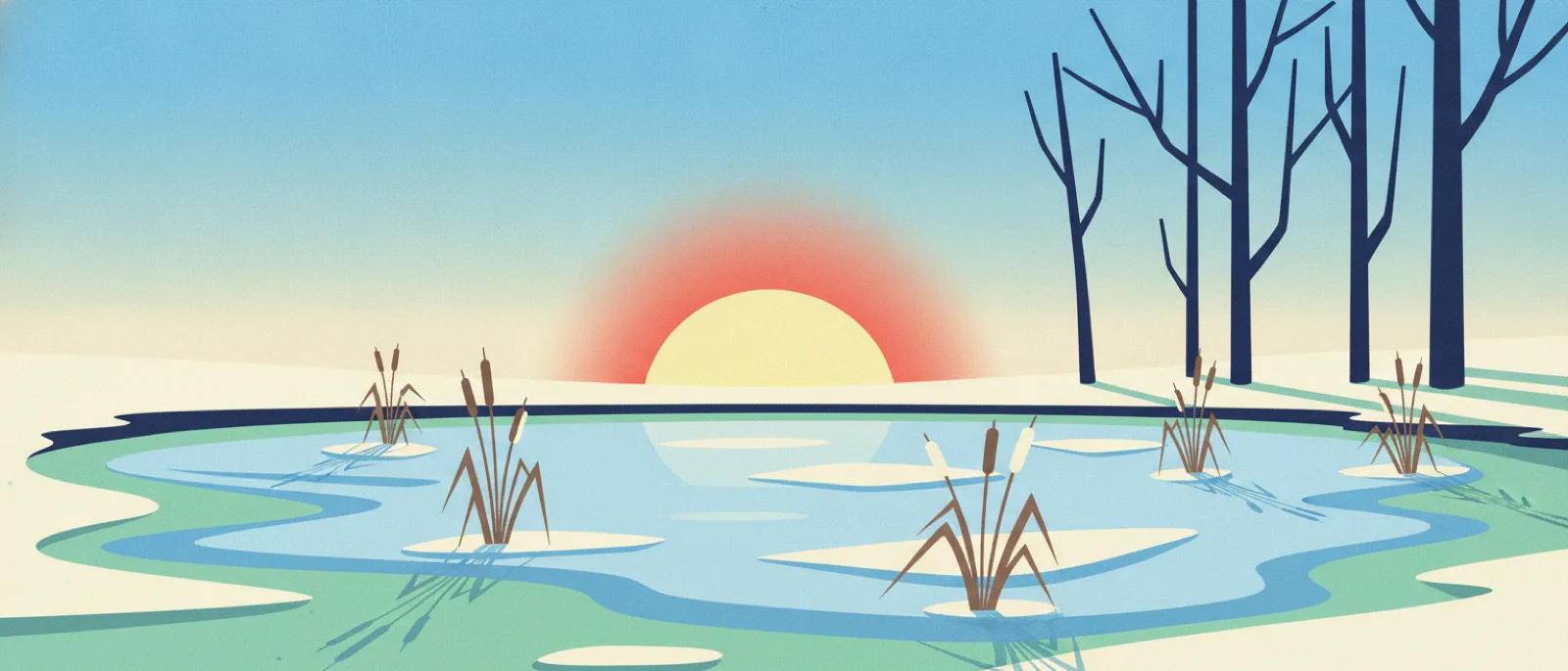
Happening unseenAmphibians
Bullfrog tadpoles that spend the winter under the ice
When: November to March
A bullfrog tadpole does not turn into a frog by the next summer. It usually takes two years, so the pond you walk past in November is holding tadpoles that hatched last year and will still be tadpoles when the ice goes out.
Why this time of year
All winter, under the ice on permanent ponds around eastern Massachusetts, last year's bullfrog tadpoles are still tadpoles. Nothing about that is visible from the bank, which is exactly why it is worth knowing.
How to notice it
- Find a permanent pond or marsh edge, the kind that never fully dries up in summer. That is the water bullfrogs use.
- Nothing will be visible from the surface. That is the point: picture the water just under the ice, held near freezing but never freezing solid, holding tadpoles that are simply waiting out the cold.
- Note the spot and come back in late spring or early summer. Large, dark tadpoles seen then in that same pond are likely ones that overwintered rather than that year's new hatch.
- Never step onto pond ice to check. Look from the bank.
Try this with kids: This pond is frozen on top, but under the ice there are tadpoles from last year that still have not turned into frogs. Why would a tadpole wait two whole years to grow legs?
metamorphosis: the change from a gilled, swimming tadpole into an air-breathing adult frog
Safety
- Never walk out onto pond or wetland ice. Thickness is unreliable even when it looks solid.
- Stay close to children at any pond edge in winter, where footing near the waterline can be icy or hidden under snow.
Sources
- northernwoodlands.orgNorthern Woodlands, a New England regional natural history magazine. Verbatim: 'The bullfrog is the perfect example of delayed metamorphosis, usually taking two years to become a frog.' Also verbatim on the overwintering conditions, 'a layer of solid ice over near-freezing, still water', and that tadpoles have a higher surface area to volume ratio and can respire across their skin more efficiently. NOTE: its separate 'two or even three years' sentence is about pond-breeding frogs AS A CATEGORY, not about bullfrogs, and is not used here
- nps.govUS National Park Service, describing a bullfrog at Acadia National Park, Maine. Verbatim: 'They usually spend 2 winters as tadpoles and live around 8 years'
- massaudubon.orgMass Audubon, opened and read 2026-09-15 for the MASSACHUSETTS presence claim only. Verbatim: the American Bullfrog is 'The largest frog found in Massachusetts', is 'Found statewide', and 'inhabits permanent bodies of water such as ponds and marshes'. This page says NOTHING about how long the tadpole stage lasts; that comes from the two sources above
Checked against these sources on September 15, 2026.
In the guide for November, December, January, February, March