Happening unseenAmphibians
Where red-backed salamanders spend the winter
When: December to February
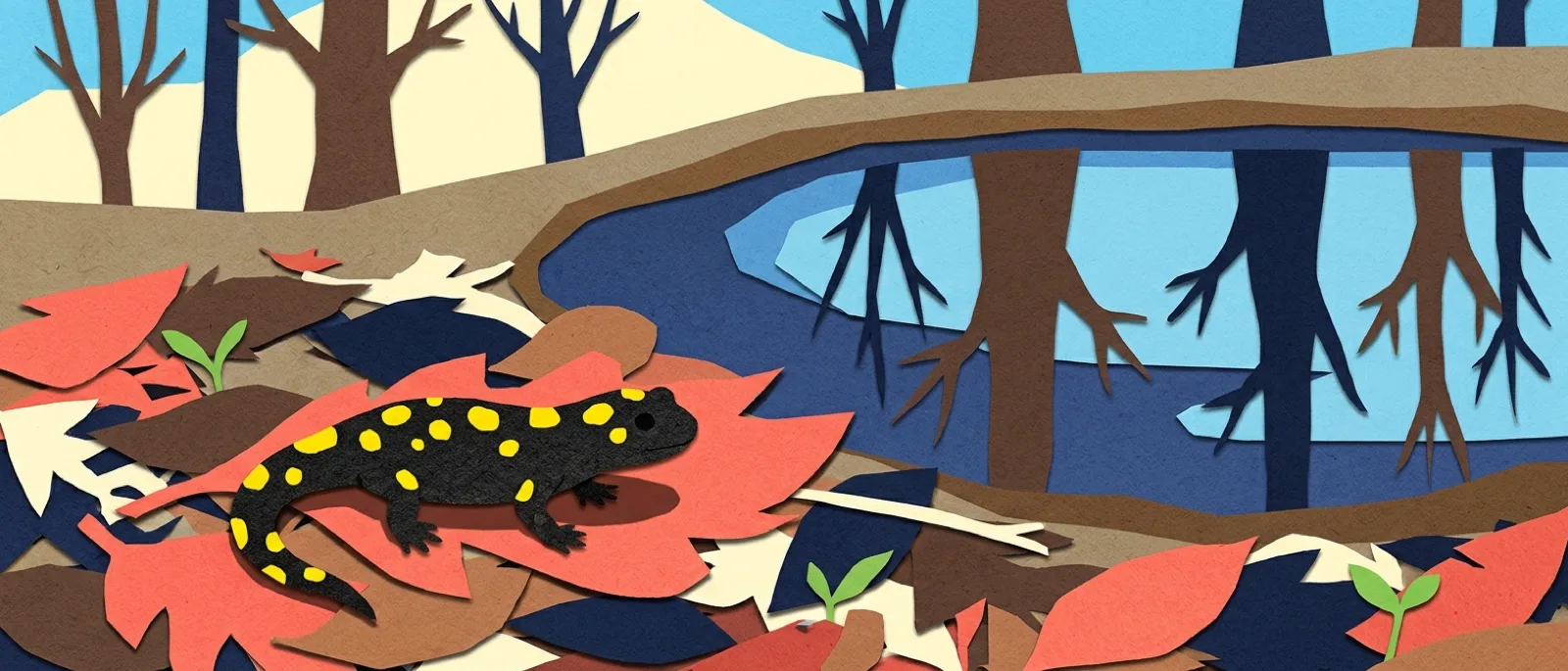
Eastern red-backed salamanders, which live all across Massachusetts and may be the most abundant backboned animal in the Northeast, spend the coldest part of winter somewhere beneath your feet. They have moved underground, below where the soil freezes, and they will come back up when the ground warms and turns damp.
Why this time of year
While the ground is frozen, red-backed salamanders are not under logs or leaf litter. They have moved to mammal burrows, root cavities and other underground spaces below the frost line, where they stay in a slowed-down, torpid state until the soil warms.
How to notice it
- Stand at the edge of any woodlot and picture the soil in layers: frozen crust on top, unfrozen soil below it. The salamanders are in the unfrozen part.
- Look for holes and openings they could use: a rotted root channel, a gap under a stone wall, a small mammal tunnel mouth. Look only, and leave logs, rocks and leaf litter exactly where they are.
- Notice that the surface is quiet. The animals that were easy to find under logs in autumn are now out of reach, and that is the point of the winter retreat.
- On the first mild, damp stretch near the end of the season, think about how they sense the same warmth and moisture and begin to move back toward the surface.
Try this with kids: Draw a picture of the woods in winter with a cutaway through the ground. Where would you tuck a tiny salamander so it stays below the frozen part?
Phrase to know: The “frost line” is the depth to which the ground freezes in winter.
Safety
- Do not dig or flip logs and rocks in winter. Cold exposure can kill a salamander that is pulled out of its shelter, and they are not out on the surface while the ground is frozen.
Sources
- northernwoodlands.orgRed-backed salamanders are in the group of terrestrial salamanders that head underground for the coldest months and must get below the frost line, which can be more than 5 feet down depending on air temperature and snow cover (a group-level figure, not red-backed specific). Bodies stay just above freezing; soil moisture keeps them from drying out. Boards that held red-backs in October were empty by mid-November. Does not state spring emergence.
- denix.osd.milUS DoD Partners in Amphibian and Reptile Conservation fact sheet (PDF): moves to subsurface areas with freezing temperatures or drought, and emerges in late winter/early spring and fall as temperatures become warm or moist again. Adults most active on the surface in spring and fall.
- thecanadianencyclopedia.caSpecies uses underground refuges 'to get below the frost line and avoid freezing temperatures during the winter'; also uses mammal burrows and root cavities.
- massaudubon.orgPresence in Massachusetts: found all across the state, and may be the most abundant vertebrate in the northeast.
- cambridgeday.comLocal news article (secondary, corroboration only): winter torpor 'below the frozen ground'.
Checked against these sources on October 30, 2026.
In the guide for December, January, February