Happening unseenAmphibians
How pond turtles survive the winter under the ice
When: December to February
Painted turtles and snapping turtles spend the winter on or in the soft bottom of ponds, under the ice. Their bodies slow down so far that they take what little oxygen they can from the water through their skin, mouth lining and rear end, and can get by for long stretches with almost none.
Why this time of year
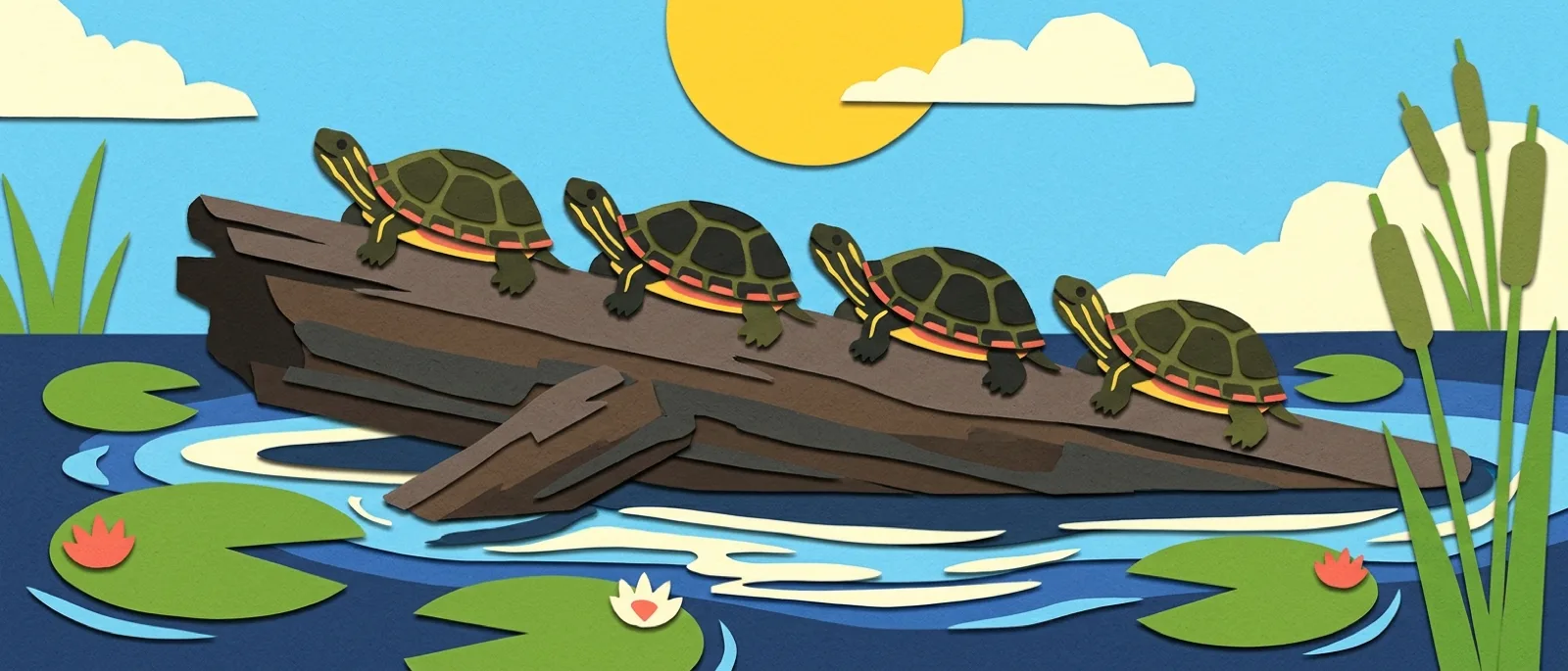
Once the pond skins over, the turtles you watched basking all summer are out of sight below, and they stay there until the water warms in spring.
How to notice it
- Visit a pond edge from the bank on a cold day and look at the whole surface. Check whether any turtle is basking on a log or rock.
- Stay on dry land well back from the water's edge and picture the pond bottom: soft mud and rotting leaves, where the turtles are settled in.
- Come back on the first mild stretch of late winter or early spring and scan sunny logs from the bank for the first painted turtle to climb out and bask.
Try this with kids: Stand on the bank and count how many turtles you can see on the logs today. Then guess how many are on the bottom, and come back in spring to count again.
Word to know: “Brumation” is the winter slow-down of cold-blooded animals, like hibernation.
Safety
- Watch from the bank only. Never step or walk onto pond ice, which can be thin or uneven even when it looks solid.
- Do not dig in the mud or pick up turtles in winter. Leave them undisturbed.
Sources
- nps.govNPS: painted turtles bury in mud and brumate in winter, slow metabolic rate, take needed oxygen from water through skin.
- portal.ct.govConnecticut DEEP: adult painted turtles winter in mud or decayed vegetation on pond bottoms and emerge earlier than other New England turtles, typically in March.
- pbs.orgLitzgus (Laurentian University) via The Conversation/PBS: ice-covered ponds limit oxygen; cloacal respiration; snapping and painted turtles tolerate it; lab forced submergence in cold water for well over 100 days.
- bostonglobe.comBoston Globe quoting Bryan Windmiller (Zoo New England): under ice turtles gape mouth and cloaca to pass oxygen into blood vessels; painted turtles can go without oxygen for three months.
- northernwoodlands.orgNorthern Woodlands: painted and snapping turtles seek soft substrate at the bottom of ponds, rivers and lakes and slow metabolism to survive months in low or no oxygen.
Checked against these sources on October 20, 2026.
In the guide for December, January, February