Look closerInsects
Willow pinecone galls on bare willow twigs
When: December to March
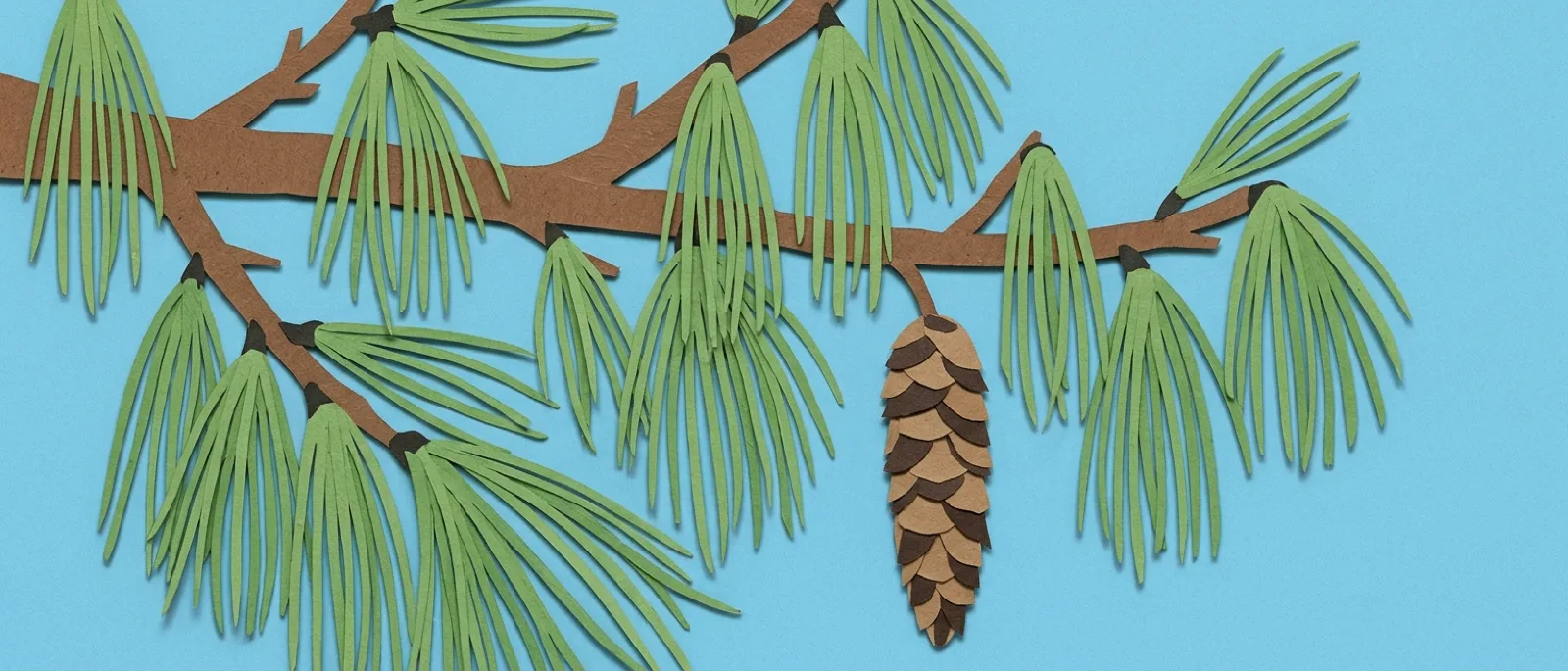
The small brown "pinecones" at the tips of bare willow twigs are galls, not cones. A tiny fly called the willow pinecone gall midge makes each one, and its larva spends the winter inside.
Why this time of year
Willows grow the galls in spring and summer, and once the leaves drop, the galls are easy to see. They stay on the twigs all winter and darken until they look like real pinecones. The larva inside waits out the cold and turns into an adult in spring, just before the buds open.
How to notice it
- Find a willow, often a shrub along a pond edge, stream, wet ditch, or damp roadside. Pussy willow is a common host.
- Look at the very tips of the bare twigs for a brown cone made of tight overlapping scales. There is only one at each twig tip.
- Compare it with the twig below it. A twig with a gall on the end is usually thicker than one without.
- Look and leave it on the plant. The gall is a winter home for the midge larva, and for many other small insects too.
Try this with kids: How many willow twig tips can you find with a little pinecone on the end? Count them, but leave every one on the branch so the bug inside can sleep until spring.
Word to know: A “gall” is a growth a plant makes around an insect's egg or larva.
Safety
- Willows often grow at the edge of water. Look from the bank and never walk out on a frozen pond or stream to reach one.
Sources
- bygl.osu.eduOhio State University Extension (BYGL). Maker Rabdophaga strobiloides, willow pinecone gall midge; third-stage larvae line the chamber with silk and 'spend the winter in stasis'; galls look most like pine cones 'particularly when the galls darken during the winter'; range 'reported from New England to California'; adults emerge 'just before bud break'; galls 'cause no appreciable harm'.
- bygl.osu.eduOhio State BYGL. 'The gall maggots overwinter in the final instar stage meaning that galls remain attached throughout the winter.' Glycerol freeze tolerance; adults 'emerging just prior to bud break'.
- bygl.osu.eduOhio State BYGL. 'The galls first appear in the early spring as a dense cluster of curved, nascent leaves at the tips of the twigs.' Galls from apical buds, 'only found at the tips of branches', one larva per gall; R. strobiloides the only Rabdophaga making a single gall at the stem tip; galled stems 'significantly larger in diameter'.
- bygl.osu.eduOhio State BYGL (2017-07-19). Female lays 'a single egg in terminal buds in the spring'; maggots 'develop inside the galls throughout the growing season', 'remain in the galls through the winter'; range New England to California.
- uwm.eduUW-Milwaukee Field Station. '31 potential residents besides the gall maker may inhabit a willow pine cone gall'; '23 pine cone galls were collected, and 564 insects were reared from them', 'only 15 contained the original host gnat'; gall forms only at willow tips.
- gobotany.nativeplanttrust.orgNative Plant Trust Go Botany Q&A (2017, Maine record): 'most commonly found on Salix discolor (pussy willow), but may be on other species.'
- api.inaturalist.orgiNaturalist (crowd-sourced dataset, refute pass query 2026-10-23): Rabdophaga strobiloides in Massachusetts, 164 observations, 100 research grade; 13 research-grade east of longitude -71.6 dated 2019-2025 including winter (2019-12-15, 2020-03-02, 2020-12-27, 2021-12-20, 2025-02-20); statewide research grade by month Nov 3, Dec 5, Jan 4, Feb 4, Mar 8. Presence evidence only, biased by observer effort.
- inaturalist.orgiNaturalist research-grade observation of a willow pinecone gall in eastern Massachusetts (cited by the refute pass as an example of the eastern records).
Checked against these sources on October 23, 2026.
In the guide for December, January, February, March