Look closerInsects
Goldenrod ball galls in winter, and the fly larva living inside
When: November to March
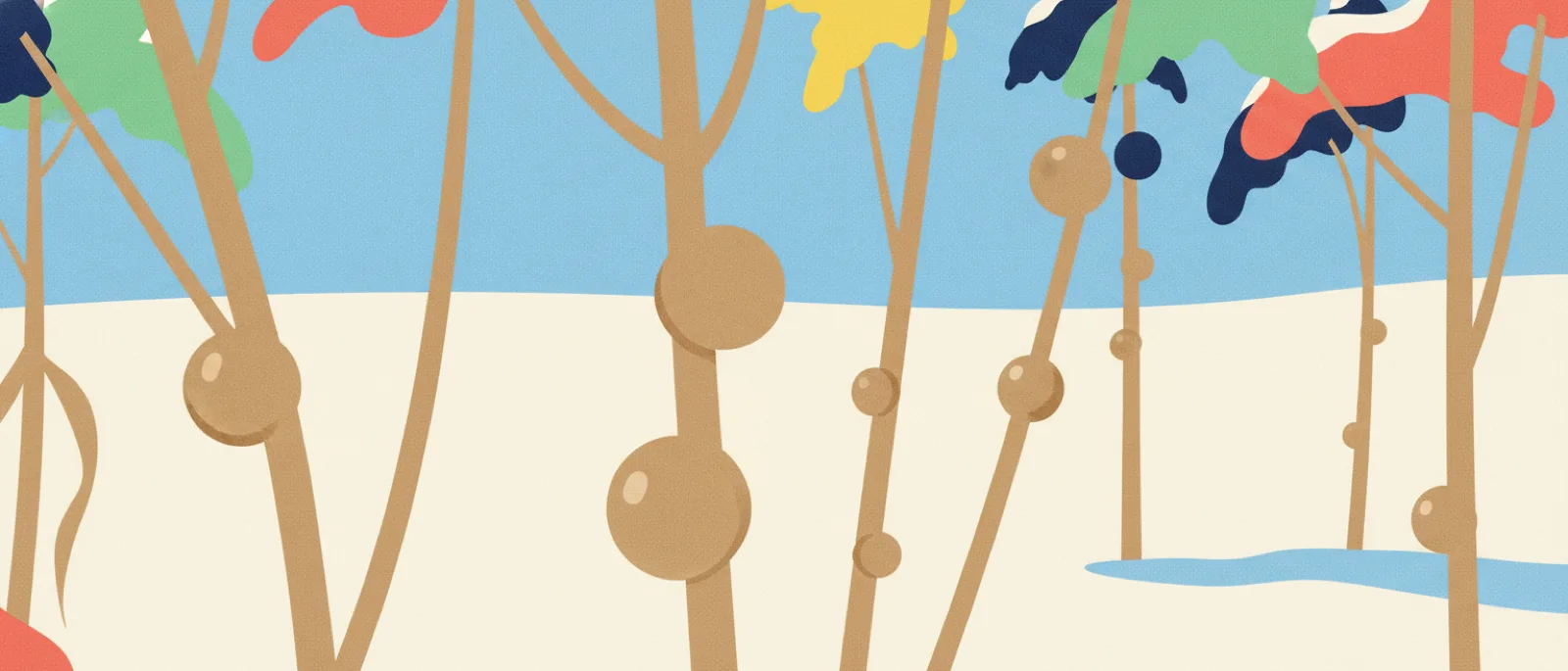
Every dry goldenrod stand carries round swellings the size of a marble or a golf ball. Each one is a fly larva's winter room, built by the plant on the larva's instructions, and it is occupied through the winter.
Why this time of year
The goldenrod is dead and bare, so the galls are obvious from the path in a way they never are in summer. The larva is inside from autumn until spring, in a dormant third stage, so winter is the whole viewing season.
How to notice it
- Find a stand of dry brown goldenrod and walk the row looking for a round swelling partway up the stem.
- Check each gall for a neat hole. A hole means a downy woodpecker or a chickadee got the larva first.
- Look for a pinhead-sized dark spot on an unopened gall. That is the escape tunnel the larva chewed before winter, stopped just short of the surface.
- Count how many galls in one patch are holed and how many are not. That number is the winter bird pressure on this one insect.
Try this with kids: How many of the goldenrod balls have a hole pecked in them, and how many are still sealed?
a gall is plant tissue a plant grows around an insect, here because the larva's saliva mimics the plant's own growth hormones
Safety
- Opening a gall ends that larva's winter. If you open one to look, open one and leave the rest of the patch alone.
Sources
- hort.extension.wisc.eduEurosta solidaginis lays eggs on growing goldenrod stems in spring; larval saliva contains a chemical thought to mimic plant hormones causing abnormal growth; the larva overwinters inside as a third instar; it creates an exit tunnel before dormancy leaving only a thin layer over the opening, visible as a pinhead-sized dark spot; cold induces conversion to glycerol and sorbitol acting as antifreeze; downy woodpeckers and black-capped chickadees break into galls to take the larvae
In the guide for November, December, January, February, March