Listen forBirds
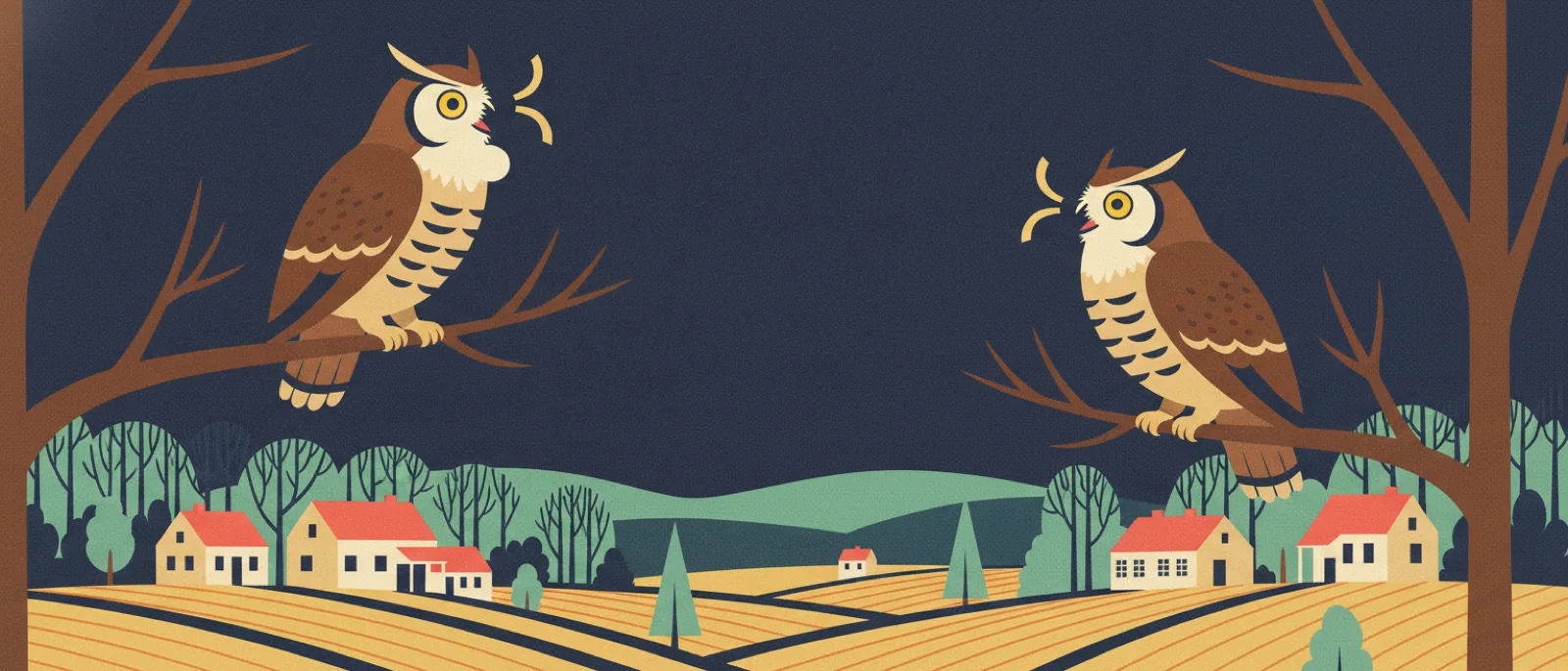
Great horned owl duets: pairs hooting back and forth in late winter
When: January to March
In late winter a paired male and female hoot at each other across their territory, and you can tell them apart: the female is the higher voice with an extra note at the start.
Why this time of year
Courtship calling runs through the back half of winter, which is why the coldest, deadest-sounding nights of the year are the ones with owls in them. It quiets down once the pair is incubating.
How to notice it
- Go out any time between sunset and sunrise. A bright moon and still air are the good nights; wind ruins it.
- Stand still for two full minutes before deciding you cannot hear anything.
- Listen for two voices answering each other rather than one calling alone. That is a pair, not a stray.
- The higher voice with an extra note at the front is the female. Most people expect the opposite.
Try this with kids: Two owls are answering each other. Can you work out which one is the higher voice?
a duet here just means the pair take turns calling, back and forth, rather than together
Sources
- northernwoodlands.orgNorthern New England: by early January the birds start calling to each other; females have a higher pitch and an extra note at the beginning of their call; go out between sunset and sunrise when the moon is bright but the wind is still; by February most great horned owls are incubating and have grown quieter
- ebird.orgNew York breeding calendar: Jan-Mar courtship, duetting mostly from late January through March, March incubating; great horned owls call year round
In the guide for January, February, March