Right outsideBirds
Dark-eyed juncos: the gray winter bird under the feeder
When: October to April
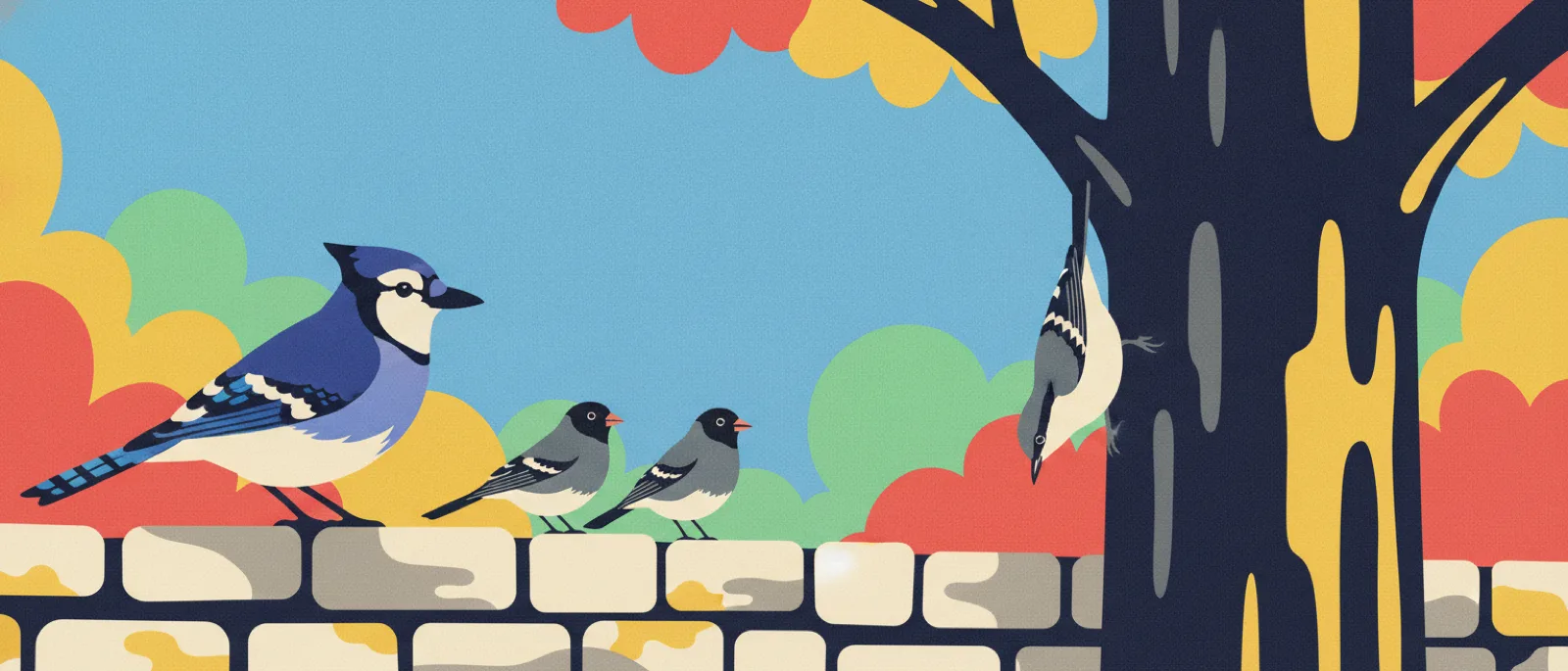
The dark-eyed junco is a slate-grey sparrow with a clean white belly and no streaks anywhere, and it is in eastern Massachusetts yards from October to April and absent the rest of the year. It feeds on the ground under a feeder rather than on it, and when something startles it into flight it flashes white outer tail feathers.
Why this time of year
Mass Audubon puts juncos in Massachusetts from fall migration in October to spring migration in April, so this is the month they reappear. The part that is easy to get wrong is thinking of them as one set of birds settling in for the season: New Hampshire Audubon, reporting banding work, says the juncos common in deep winter tend to depart in March and be replaced by different birds working their way north, so a feeder flock is a shifting mix rather than the same individuals all winter.
How to notice it
- Look at the GROUND under a feeder, along a driveway edge or under a shrub, not at the feeder itself. Juncos hop rather than walk and they work the spilled seed.
- Check the belly. A junco is uniform slate grey over head, back and wings against a sharply clean white belly, with no streaks or stripes anywhere on the bird.
- Wait until one flushes. White outer tail feathers open like a flash as it flutters away, and that is the quickest way to be sure of what you saw.
- Look again in March and April. You will probably still see juncos, but they may not be the same birds, because the winter ones leave and northbound ones pass through.
Try this with kids: Watch one hop away from you. Can you catch the white stripes down the edges of its tail before it lands again?
to flush a bird is to startle it into flying up
Sources
- massaudubon.orgMass Audubon. Carries most of this card verbatim: most often seen in Massachusetts from fall migration in October to spring migration in April; uniform slate grey on back, wings and head with a clean white belly; both males and females lack streaks or stripes of any kind; forage on the ground, hopping along in small social groups; flashing bright white stripes on either side of their tails as they flutter away. Also that juncos are regular breeders throughout western Massachusetts, east to Worcester County. The tail-flash claim is THIS page's, not Audubon's.
- audubon.orgNational Audubon field guide, cited for one thing only: will come to bird feeders, but tends to forage on the ground under the feeding tray. This page describes the white outer tail feathers as a field mark and as a courtship display, and does NOT support the flash-when-flushed claim, which is why that claim is attributed to Mass Audubon above.
- stateofthebirds.nhaudubon.orgNew Hampshire Audubon. The snowbird nickname, a regional New England window of November through April, and the finding this card's why_now is built on: juncos common in the depth of winter tended to depart in March, to be replaced by different birds working their way north, so feeder juncos are a constantly shifting mix of birds moving north or south at different times of year.
Checked against these sources on September 13, 2026.
In the guide for October, November, December, January, February, March, April