Go seeBirds
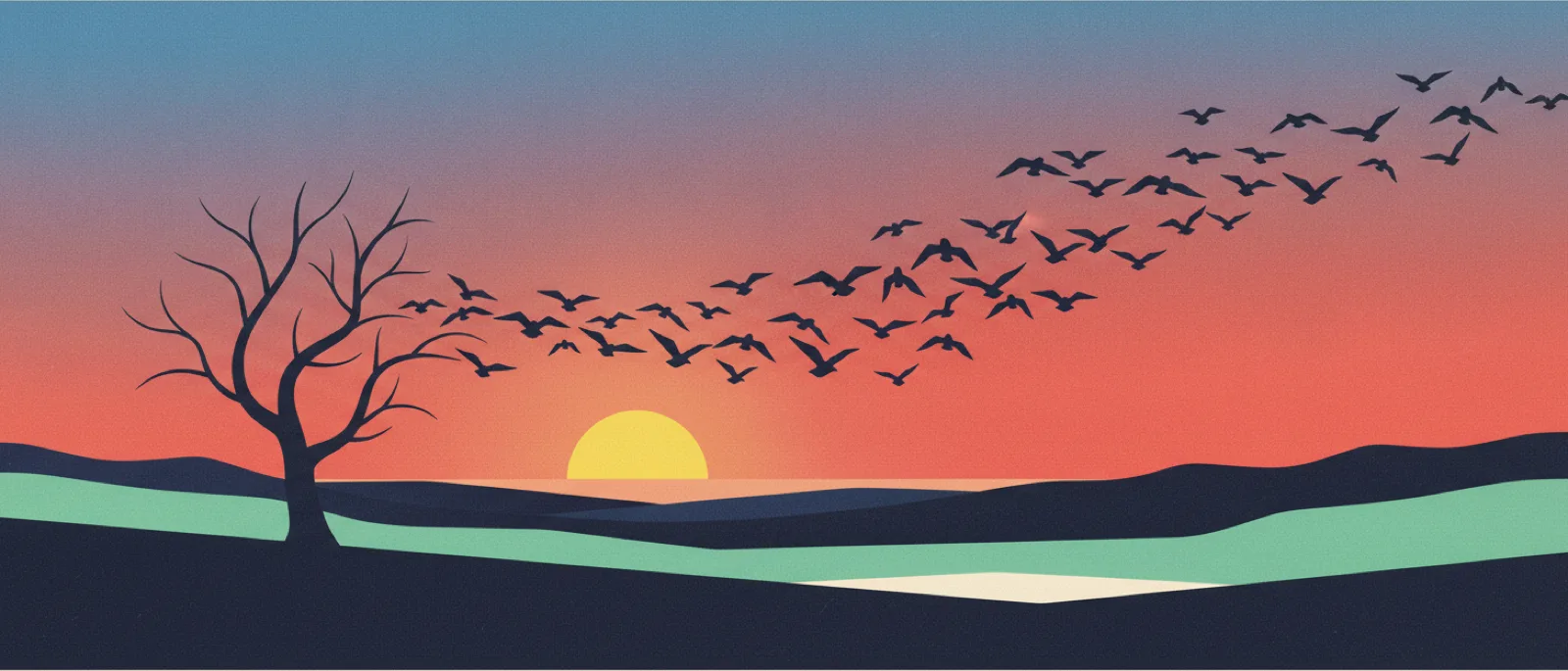
Crows flying to a shared winter roost before sunset
When: October to February
Once nesting is over, American crows stop sleeping in pairs on their own patch and pile into one enormous shared night roost. For about an hour before sunset they pass overhead in long loose strings, all aimed at the same place from every side of town.
Why this time of year
Crows have given up their breeding territories for the year, so from October the roost starts building and keeps adding birds through the cold months. The evening commute is the part you can watch from anywhere; the roost itself is the destination.
How to notice it
- About an hour before sunset, find open sky near a river, a wide road or a big car park, and look for crows all flying the same way. Count how many pass in a minute, then count again ten minutes later.
- Follow their direction with your eyes. Every stream you see should be aiming at the same place from a different side.
- Look for a staging stop on the way: tall trees, a light-pole cluster or a flat roof where crows pile up and get loud. These move from night to night.
- Stay until about half an hour after sunset. That is when they leave the staging spots and drop into the actual roost trees, in almost no light.
Try this with kids: Pick one crow and follow it with your finger until you lose it. Is it going the same way as all the others?
a roost is simply a place where birds sleep, and crows share one only outside the nesting season
Safety
- This happens in fading light, often near roads and car parks. Stay on pavements, wear something visible and keep children in hand.
- Roosts are often on hospital, business or mill property. Watch from public streets rather than crossing onto private land.
- Do not stand or park directly under the roost trees.
Sources
- massaudubon.orgMass Audubon: American crows form communal night roosts in Massachusetts from November through March, breaking up in late February or March; crows travel up to 50 miles to reach one; a roost may hold anywhere from 100 to 10,000 or more birds; sites can be in densely populated residential or industrial neighbourhoods; birds arrive from all directions about an hour before sunset and gather first at staging areas.
- ecga.orgEssex County Greenbelt, the only source establishing a large winter crow roost in eastern Massachusetts specifically, at Lawrence on the Merrimack. It gives the sourced sizes, typically about 2,500 in October growing to almost 15,000 in late January and early February, and the two-stage evening: pre-roost staging about an hour before sunset, converging on the roost about half an hour after. It ALSO states that staging locations may change on any given night and that the final roost location has changed many times between years, which is why this entry does not print the roost as a fixed address.
- audubon.orgAudubon: adult American crows use communal roosts only outside the breeding season, and the accepted reasons are warmth, protection from predators, information about food and mate finding. Also the morning reversal, with the first birds leaving about an hour before sunrise.
Checked against these sources on September 6, 2026.
In the guide for October, November, December, January, February