Right outsideBirds
Wild turkey flocks in fall: hens and broods joining forces
When: September to February
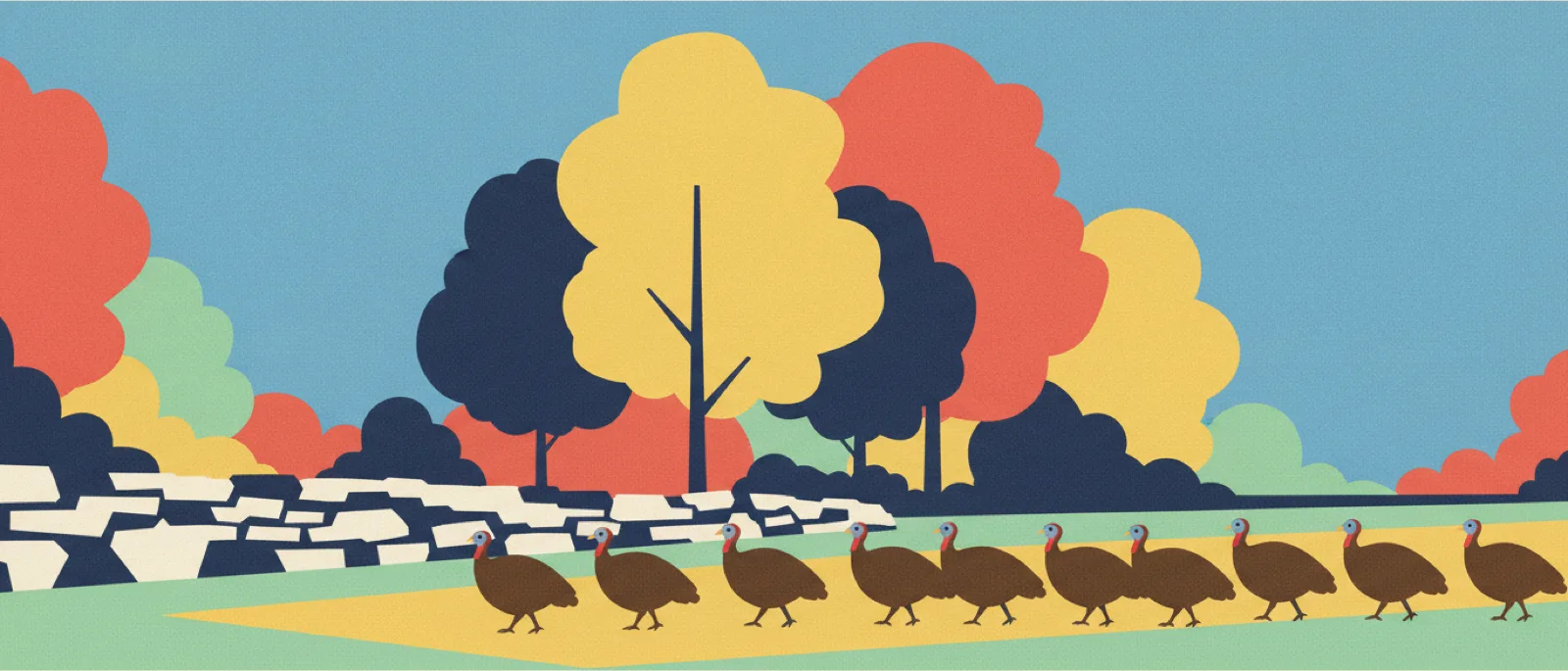
The hens and their grown broods have joined forces: fall turkey flocks in New England commonly hold several families, 40 or more birds, sweeping across yards and fields like a feathered plow line.
Why this time of year
Broods hatched in June have stayed with their mothers for 4 to 5 months, and by early fall those families have merged into the year's biggest flocks, while the adult toms keep to their own small bachelor groups of two or three.
How to notice it
- Count any flock you meet; fall groups of several hens plus young can pass 40 birds.
- Sort it: one or two big adult hens, many slimmer young, and no big toms, who travel separately in pairs or trios.
- Look up at dusk; turkeys fly into trees to roost each evening, and a whole flock may fill adjacent trees.
- In winter the same birds re-sort into flocks by age and sex, so a January flock is worth a second count.
Try this with kids: How many turkeys can you count before the flock walks into the woods?
a brood is the group of young a hen raised this year
Safety
- Never feed turkeys; fed birds turn bold and can treat people as flock subordinates.
- If a turkey acts pushy, be big and loud; scaring a bold turkey off is what MassWildlife itself advises.
Sources
- portal.ct.govIn late summer, hens with their broods join up to form flocks, typically 10-20 birds with reports up to 100; poults remain with their mother throughout summer, fall, and winter; males may join but more often form groups of their own.
- pa.govIn autumn, flocks often contain several old hens and their young for a total of 40 or more birds; during early winter, family groups disperse and form new flocks by sex and age; old toms usually remain apart in pairs or trios; each evening turkeys fly into trees to roost, a flock roosting in the same or adjacent trees.
- salemma.govMassWildlife: broods usually appear in the first week of June and young turkeys remain with their mother for at least 4 to 5 months; turkeys live in flocks organized by pecking order and may attempt to dominate or attack people they view as subordinates; do not feed turkeys, since feeding can lead to bold or aggressive behavior; do not hesitate to scare or threaten a bold turkey with loud noises.
- massaudubon.orgTurkeys thrive not only in rural populations but in cities and suburbs; they can be aggressive, chasing people, pets, and cars; deterrents include stopping feeding and making loud noise when a turkey approaches.
In the guide for September, October, November, December, January, February