Right outsideBirds
Black-capped chickadees hiding seeds in bark
When: October to December
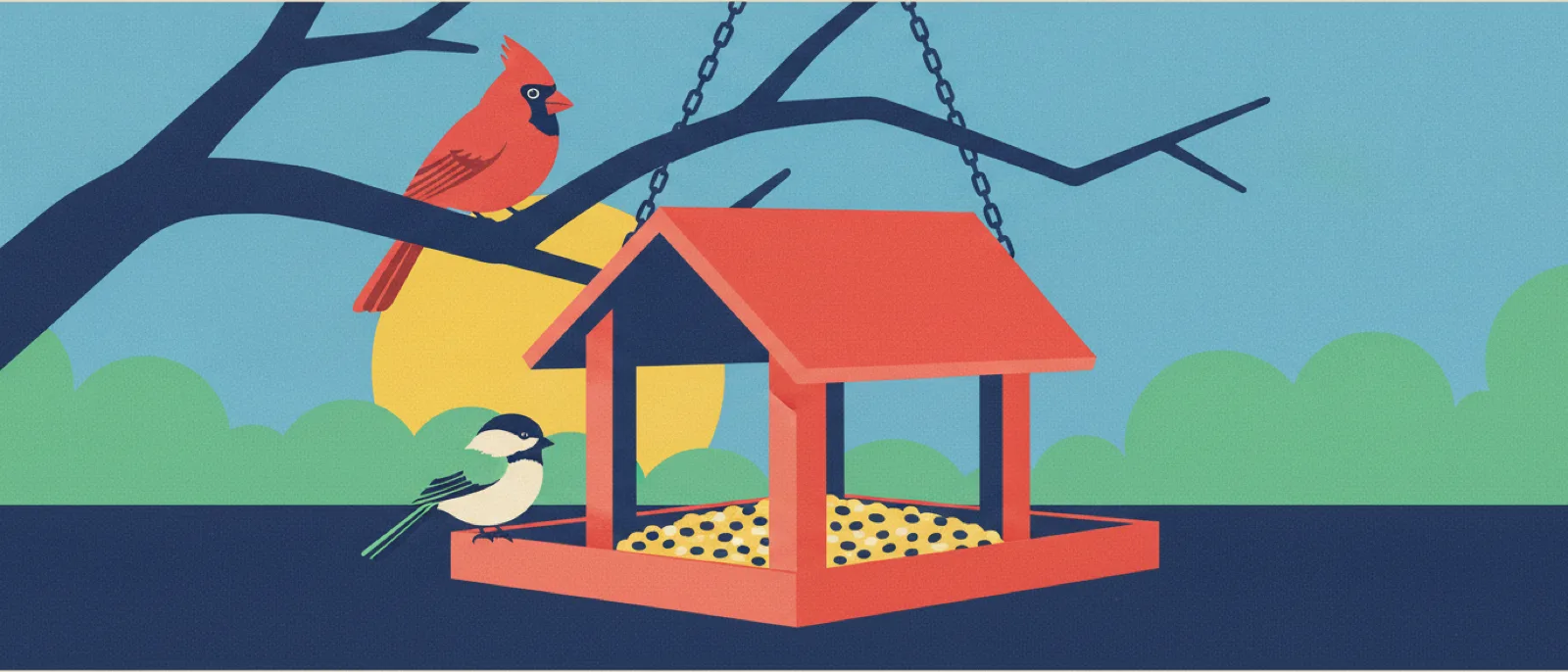
Black-capped chickadees take seeds from feeders and tuck them into bark crevices to eat later. A chickadee that grabs one seed and flies off may be hiding it.
Why this time of year
Autumn into early winter is when chickadees store the most food, building a pantry for the cold months.
How to notice it
- Watch a feeder or a seed-bearing spot for a chickadee. It may take one seed at a time and fly off with it.
- Follow the bird with your eyes. Sometimes it stuffs the seed into a bark crevice on a nearby tree or branch.
Try this with kids: Count how many seeds one chickadee carries off in a minute. Where do you think they all go?
Word to know: A “cache” is a hidden stash of food saved for later.
Sources
- audubon.orgAudubon Field Guide: 'Often stores food to be recovered later'; readily comes to feeders; takes sunflower seeds one at a time and stuffs them into bark crevices; mostly permanent resident.
- audubon.orgAudubon news: 'At this time of year the birds cache food, usually seeds, throughout their home range' (late summer and early fall). Used ONLY for fall caching timing, not for brain growth.
- pmc.ncbi.nlm.nih.govSherry and Hoshooley, Phil Trans R Soc B 2010 (peer-reviewed review): food storing 'reaches maxima in autumn and early winter'; hippocampal seasonal timing inconsistent between studies.
Checked against these sources on October 2, 2026.
In the guide for October, November, December