Look closerBirds
Starling flocks twisting in unison: why they fly as one shape
When: September to January
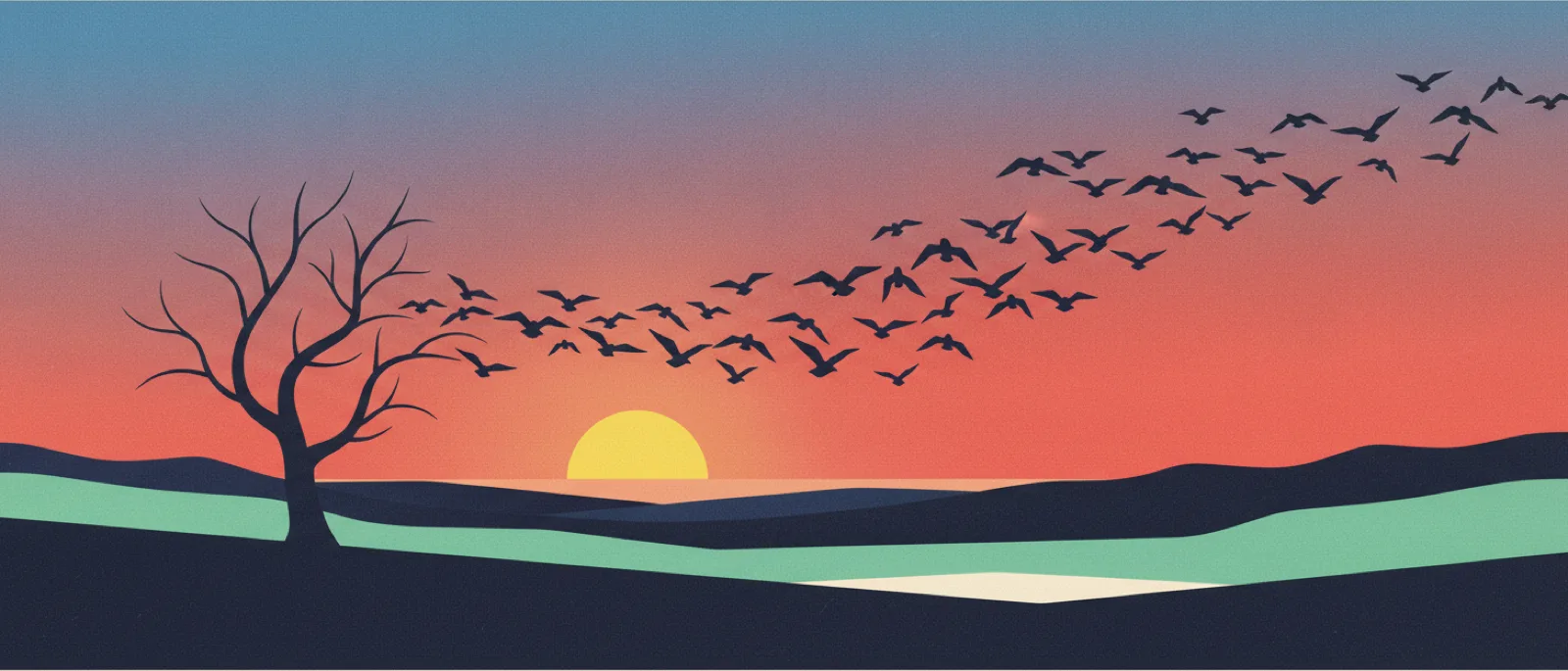
Autumn starling flocks in Massachusetts fly as one shape-shifting cloud, twisting and turning in unison because no falcon can pick a single bird out of a swirl of thousands.
Why this time of year
Fall is when Massachusetts starlings pack into big compact flocks, and through fall and winter those flocks merge toward communal roosts that can hold tens of thousands, so any large bird cloud from fall into midwinter deserves a stop and a look.
How to notice it
- Scan for a dark cloud of birds that stretches, folds, and snaps into new shapes; that unison is the giveaway.
- Watch for the wave: when a hawk or falcon makes a pass, a ripple of turning birds races through the flock.
- Early evening is best, when flocks fly toward their nightly roost.
- The state's most famous roost is the Fore River Bridge in Quincy, where a hundred thousand starlings are routine in winter; big flocks near highways are no accident.
Try this with kids: What shapes does the flock make? Call them out before it changes again.
the twisting happens because each bird tracks its nearest neighbors, with no leader at all
Safety
- If a roadside flock catches your eye while driving, find a legal place to pull over before watching.
Sources
- massaudubon.orgIn autumn, large compact starling flocks often frequent coastal marshes, twisting and turning in unison in a manner similar to shorebirds; in early evening starlings fly to communal roosts; in winter the roosting flocks gather in larger numbers in fewer locations, including downtown Boston buildings and under highway bridges, the best-known roost being the Fore River Bridge in Quincy where estimates of a hundred thousand or more are routine.
- audubon.orgThroughout the fall and winter, starlings gather in roosts that can swell into the tens of thousands; unpredictable motion and many individuals make it hard for a predator to track and catch any one bird; each bird tracks its nearest neighbors rather than following a leader.
- audubon.orgWhen a falcon approaches, agitation waves ripple through the flock at nearly 44 feet per second; flock members benefit from hundreds of eyes watching for predators and continuously shift toward the safer center of the flock.
In the guide for September, October, November, December, January