Look closerInsects
Woolly bear caterpillars crossing roads in fall
When: September to October
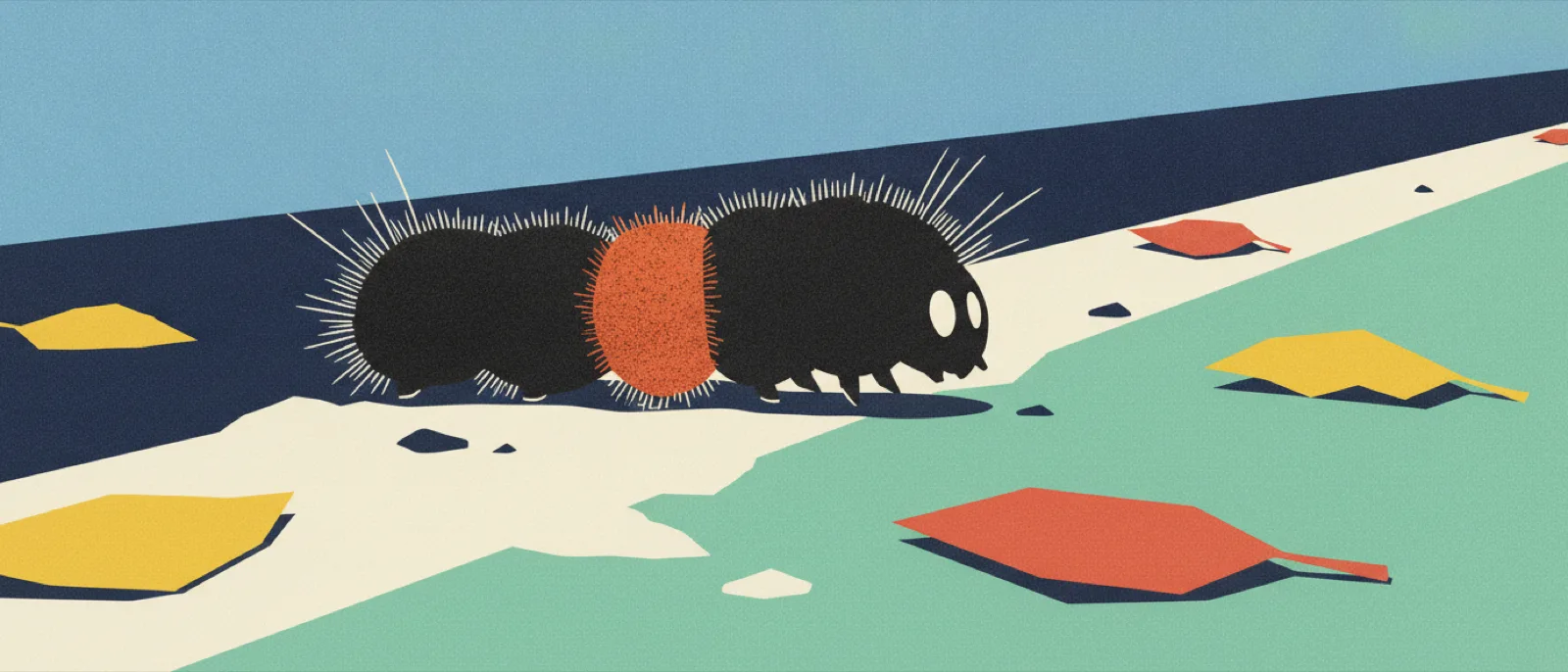
The black-and-rust fuzzy caterpillars crossing pavement in fall are woolly bears hunting a winter shelter, where they will freeze nearly solid and thaw out alive in spring.
Why this time of year
Fall is when woolly bears leave their food plants and wander in the open, looking for leaf litter, a woodpile, or loose bark to spend the winter under, so September and October are when a family actually meets one.
How to notice it
- Check the driveway, the sidewalk, and quiet road edges on mild fall days; crossings peak in October.
- Look at the bands: black at both ends, rusty in the middle.
- The rust band grew wider each time the caterpillar shed its skin, so a wide band means an older caterpillar or a good growing season, not a mild winter coming. The folklore does not hold up.
- Watch where it is headed: toward leaf litter, a stone wall, or a woodpile is toward its winter spot.
Try this with kids: Is your woolly bear's middle band wider or narrower than your thumb nail?
a woolly bear is the caterpillar of the Isabella tiger moth, and it spends winter as a caterpillar rather than a cocoon
Safety
- The interesting crossings happen on pavement, so mind traffic first and look from the edge.
Sources
- massaudubon.orgFall woolly bears crossing roadways are risking life and legs to find the perfect leaf litter, board, or pile of wood chips under which to hibernate; they are among the few caterpillars to overwinter as caterpillars; the woolly bear is not an accurate weather forecaster, since each shed skin grows the orange band a bit larger, so band width indicates the caterpillar's age, not future winter weather.
- weather.govCaterpillars found in autumn have left food plants to search for a dark sheltered spot to hibernate as larvae; they make a natural organic antifreeze called glycerol and freeze bit by bit until everything but the interior of their cells is frozen; band width is an indicator of the current or past season's growth rather than the severity of the upcoming winter.
- extension.entm.purdue.eduIn October woolly bears cross roads en masse to find an over-wintering site under leaf litter, fallen branches, or rock crevices; they remain larvae over winter and chemically alter their bodily fluids to work much like anti-freeze.
In the guide for September, October