Listen forInsects
Cricket chirps and temperature: why the chorus slows as nights cool
When: July to October
Crickets are cold-blooded, so the tempo of their chirping tracks the evening air: brisk at dusk, slower as a late-summer night cools off.
Why this time of year
From midsummer into fall the crickets sing every mild night, and the season's widening gap between warm afternoons and cool evenings makes the slowdown easy to hear in a single sitting.
How to notice it
- Early in the evening, pick out one steady chirper and clap or nod along with its beat.
- Come back an hour or two later and find the beat again; cooler air means a slower song.
- For the classic trick, count one snowy tree cricket's chirps for 15 seconds and add 40 to get roughly the air temperature in Fahrenheit.
- Check a porch thermometer to see how close the cricket came.
Try this with kids: Does the rhythm change as the night cools?
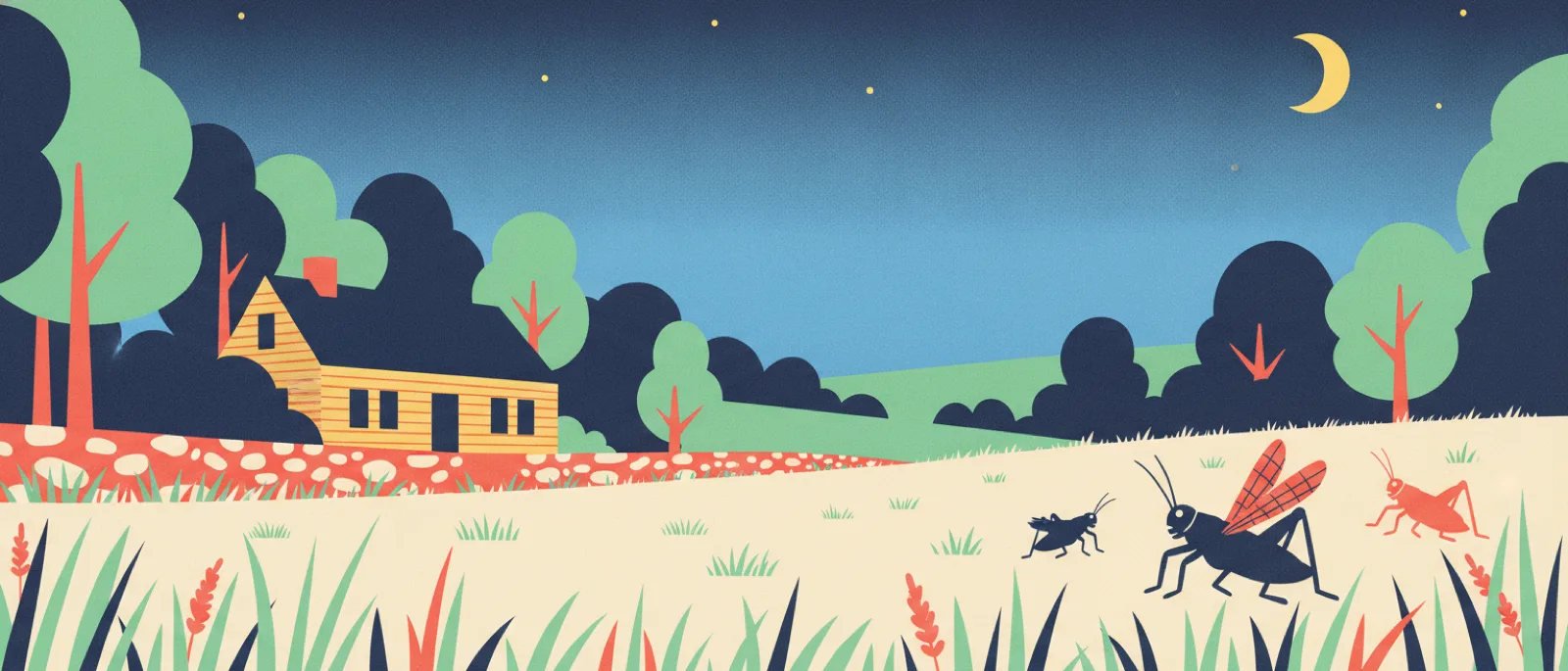
the chirp is wing-rubbing: a ridged file on one wing scrapes against the other
Sources
- uwm.educall tempo is set by air temperature; snowy tree cricket chirps counted for 15 seconds plus 40 give degrees Fahrenheit (Dolbear, 1897); tree crickets sing in the late summer and fall chorus; sound made by rubbing the rasp and file on the forewings
- hitchcockcenter.orgMassachusetts snowy tree crickets as temperature-tellers; crickets are cold-blooded so ambient temperature directs their behavior; fall field crickets tune up in early August, spring field crickets sing through late July
In the guide for July, August, September, October