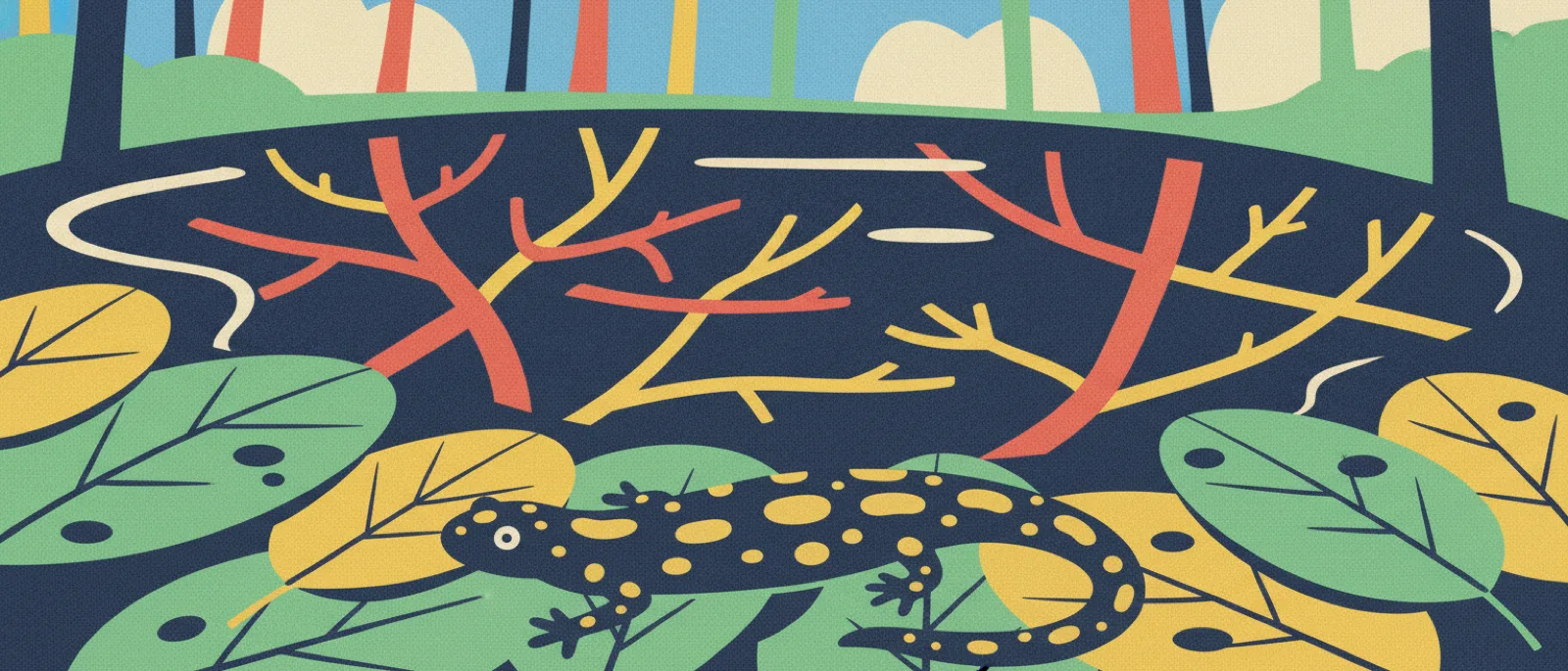
Happening unseenLandscape
Why vernal pools dry up in summer, and why that matters
When: June to October
By midsummer most Massachusetts vernal pools are shrinking toward a dry bed of dark leaves, and that regular drying is exactly what keeps fish from ever settling in.
Why this time of year
The pool that filled with snowmelt and spring rain is drawing down to mud and leaves, and a fishless bed is the reason wood frogs and spotted salamanders could breed here in spring.
How to notice it
- Think of a woodland hollow that held water in early spring and visit it again now.
- Look for the old waterline: a ring of matted, darker leaves and water-stained trunks around a low spot.
- Stay at the rim and look with your eyes; the dry bed is still a nursery, not a shortcut.
- Come back after big fall and winter rains to catch the moment the basin starts to refill.
Try this with kids: Can you find the ring of matted leaves that shows how big the pool was in spring?
a vernal pool is a woodland pool that fills in winter and spring and usually dries by summer's end
Safety
- Stay out of the pool bed even when it looks empty: marbled salamanders lay eggs in dry vernal pool bottoms in fall, and other residents wait out the dry spell in the litter.
- Never move eggs, animals, or the leaf layer of a pool basin.
Sources
- massaudubon.orgpools fill in winter and spring, are typically dry during most of the summer and fall, are devoid of fish; rare salamanders cannot reproduce in permanent ponds where fish would eat their young; marbled salamanders lay eggs in dry pool bottoms in fall
- massaudubon.orgtemporary isolated pools fill with melting snow, spring rain, runoff, and groundwater at winter's end; critical breeding habitat for amphibians and invertebrates adapted to temporary water
In the guide for June, July, August, September, October