Look closerLandscape
Glacial erratics: lone boulders the ice sheet left behind
When: All year
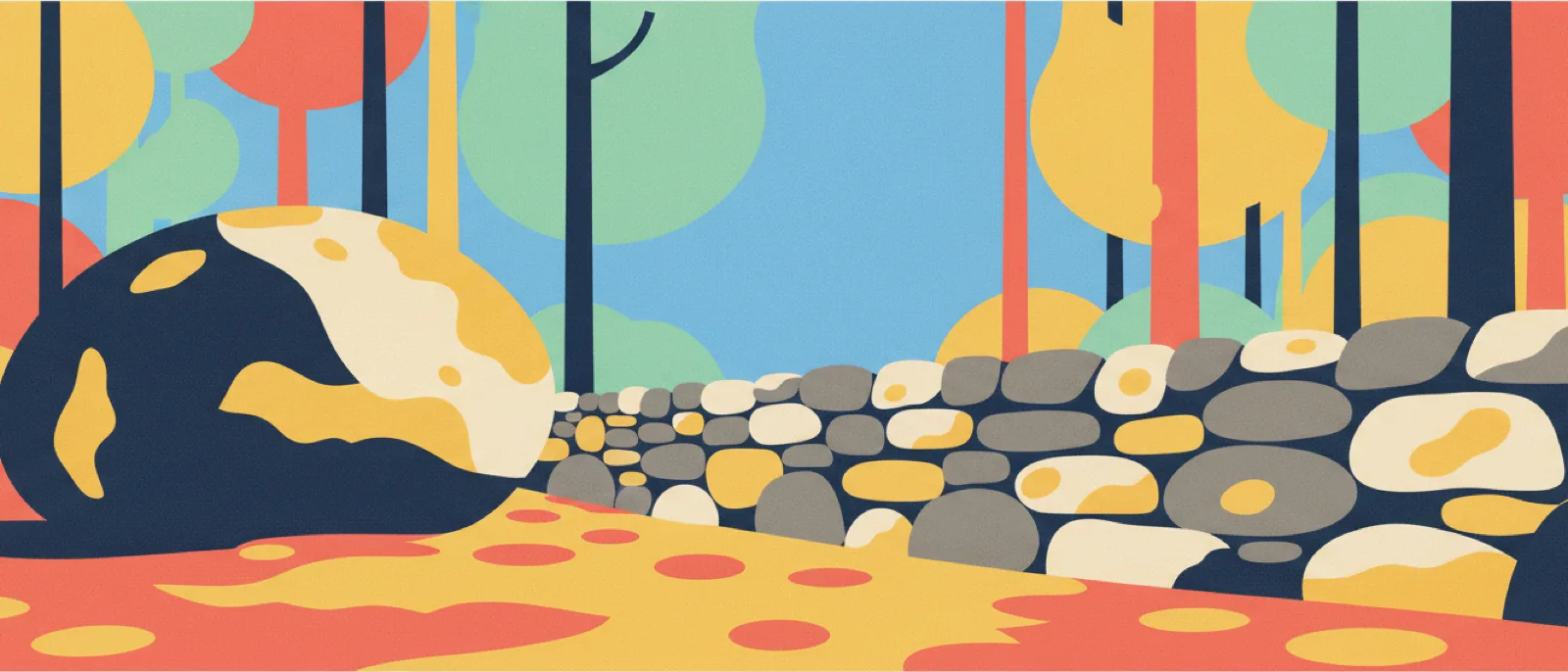
That huge lone boulder sitting in the woods or a field probably is not local rock. The last ice sheet picked it up somewhere else and dropped it here as it melted, thousands of years ago.
Why this time of year
A walk through eastern Massachusetts woods or an old field can turn one up: a big boulder sitting alone, a different rock from the ledge beneath it. It has been there since the ice left, and leaf-off months make it easier to spot from a trail.
How to notice it
- Look for a single large boulder standing alone, not part of a ledge or outcrop.
- Compare its rock type and color to any exposed bedrock or ledge nearby; a clear mismatch with the bedrock is the giveaway. Loose stones nearby are often erratics too, so they are not a fair comparison.
- Walk in the leaf-off months, roughly November through April, when bare trees make boulders easier to see from a distance.
Try this with kids: Why do you think this giant rock is sitting here all by itself, with nothing else like it nearby?
erratic: a boulder carried and dropped by a glacier, often a different rock type than what is under it
Safety
- Boulders can be slippery when wet, mossy or icy; watch footing if you climb up.
Sources
- pubs.usgs.govUSGS: a glacial erratic is a rock transported a significant distance by a glacier and deposited on melting, usually differing in composition from the local bedrock or sediment it rests on.
- usgs.govUSGS/NPS: erratics are boulders too large to have moved by any process but a glacier; eastern Massachusetts example Doane Rock, left by the retreating Laurentide ice sheet.
- svtweb.orgSudbury Valley Trustees interpretive page: identification by composition mismatch with local bedrock, 50-200 mile transport range, a local erratic likely carried from New Hampshire.
Checked against these sources on September 28, 2026.