Right outsideSky
Sun pillars: a column of light above the low sun
When: All year
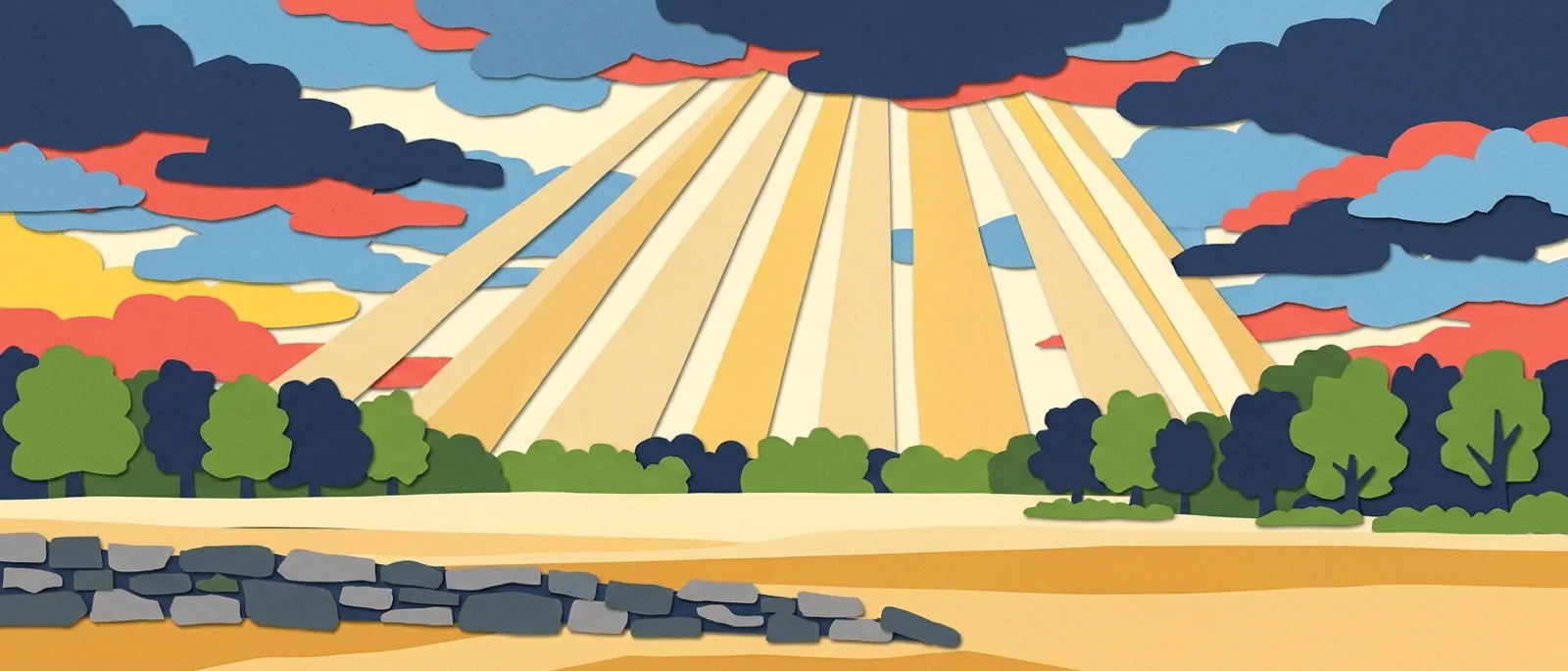
A sun pillar is a narrow shaft of light standing straight up from the sun when it sits low at sunrise or sunset. It comes from millions of flat ice crystals drifting nearly level, each one flashing a glint of sunlight toward you.
Why this time of year
Pillars need a low sun and floating, nearly flat ice crystals. The high, wispy clouds called cirrus are made of ice crystals, so a pillar is possible at a dawn or dusk with that kind of cloud near the sun, though pillars are more likely in cold weather. Pillars can also hang on after sunset, standing over the sun you can no longer see.
How to notice it
- Around sunrise or sunset, find a spot with a low, open view toward the sun, and check for thin, wispy high cloud near it; that cloud is made of ice crystals.
- Stand where a building or a thick tree trunk hides the sun disk completely, then look above where the sun sits for a narrow, bright column.
- After sunset, keep watching the place where the sun went down: a pillar can stay up to about an hour, always right above the hidden sun.
- Notice the color; pillars seen just after sunset often look deep red.
Try this with kids: Stand where a building or a big tree hides the sun from you, then look just above it. Can you spot a straight stripe of light standing up into the sky?
Word to know: The “pillar” is not a real beam; it is millions of separate glints from tiny, nearly flat ice crystals that line up into one column.
Safety
- Never look straight at the sun; keep the sun disk blocked behind something solid the whole time you look.
Sources
- forecast.weather.govNWS glossary: 'A bright column above or below the sun produced by the reflection of sunlight from ice crystals.'
- gi.alaska.eduUAF Geophysical Institute: six-sided plates flutter downward like leaves; pillars from light reflected off their surfaces; 'most commonly seen when the sun is low'.
- atoptics.co.ukAtmospheric Optics: pillars are 'composed of millions of almost horizontal glints' from ice crystals, predominantly large irregular plates; 'more likely to form in cold weather conditions'. Weak secondary page (refute pass found internal errors); used only alongside UAF, NWS and NASA.
- atoptics.co.ukAtmospheric Optics: pillars 'can persist for up to an hour' after sunset, 'always positioned directly above the hidden sun'; crystals in high clouds such as cirrus. Weak secondary page (it wrongly attributes pillars to refraction); the 'up to an hour' detail rests on it alone.
- atoptics.co.ukAtmospheric Optics: plate-like crystals created the pillars; those 'observed shortly after sunset often exhibiting deep reddish hues'.
- weather.govNWS Louisville: cirrus are wispy, feathery, composed entirely of ice crystals; no season tied.
- science.nasa.govNASA APOD: flat ice crystals lie nearly flat from air resistance; seen when the Sun is rising or setting.
Checked against these sources on November 3, 2026.