Right outsideSky
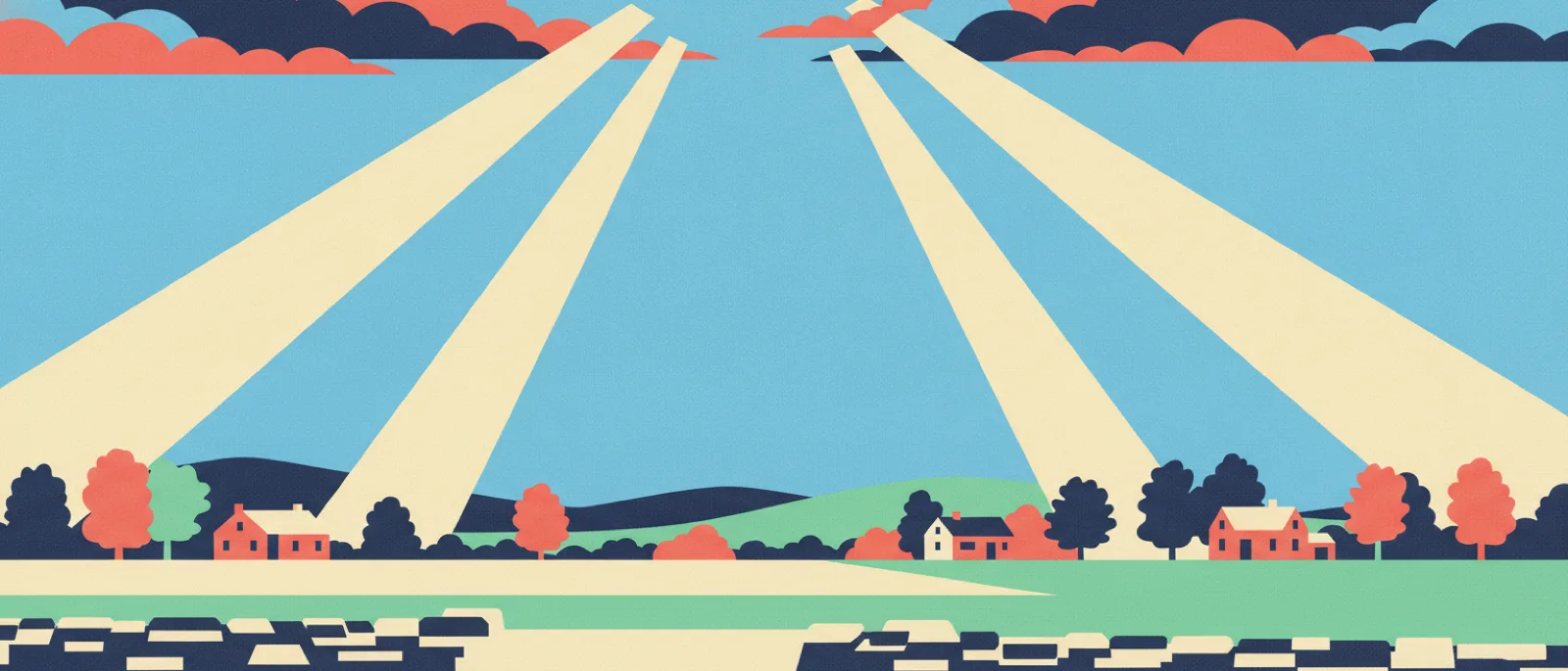
Crepuscular rays: sunbeams fanning out near sunrise and sunset
When: All year
Broken clouds and haze can make bright and dark bands fan across the sky near sunrise or sunset.
Why this time of year
Any evening the sun drops behind a broken cloud bank, gaps let beams through while the clouds cast dark lanes between them, and the low sun supplies the contrast that makes the whole fan stand out.
How to notice it
- Near sunrise or sunset, watch for the sun sliding behind clouds with gaps in them.
- Pick out the bright beams and the dark lanes between them; the dark lanes are cloud shadows.
- Notice how the beams seem to fan out from the sun, then think of train tracks; the beams are nearly parallel, and the spreading is perspective.
Try this with kids: Do the sunbeams really spread apart, or do they just look that way, like train tracks do?
the beams are sunlit air; tiny particles of haze and moisture scatter the light and make the shafts visible
Safety
- Look at the beams and shadows, not straight at the sun.
Sources
- forecast.weather.govNWS definition: the alternating bands of light and dark (rays and shadows) seen when the sun shines through clouds.
- esrs.jsc.nasa.govGaps between clouds let rays of light through to partially illuminate regions shadowed by the clouds; water vapor and aerosol particles scatter light, accentuating the bright rays.
- van.physics.illinois.eduThe rays are nearly parallel from clouds to ground; they appear to converge because of a perspective effect, the same reason a long straight road seems to narrow to a point.