Happening unseenMammals
Young red foxes leave home in autumn
When: September to November
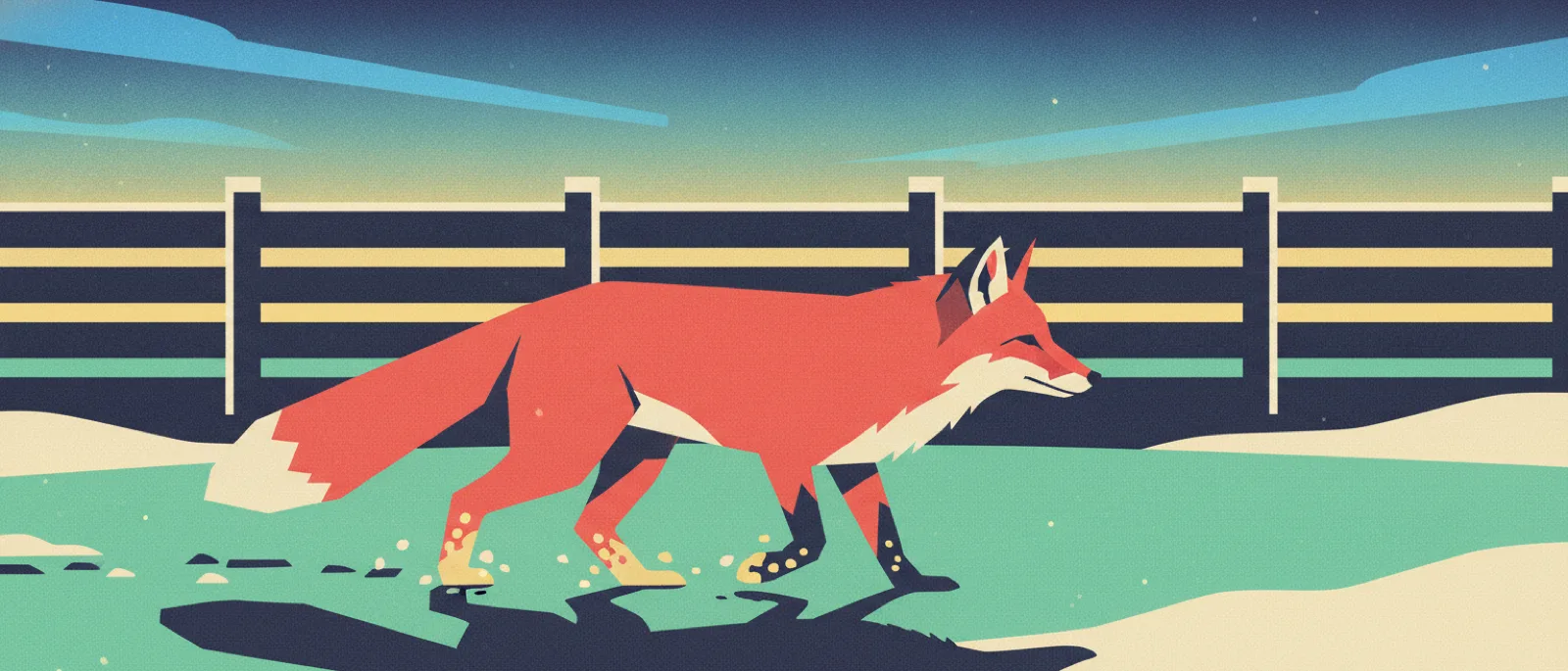
Red fox pups born in spring break up from their family groups in autumn and move off to find ranges of their own. Some travel a long way, so a fox you meet now may be a young one passing through.
Why this time of year
Fox families stay together through summer. By September and October the young are dispersing, so foxes are on the move through fall.
How to notice it
- If you happen to be out at dawn or dusk near field edges, yard borders, or quiet roads, watch for a small-dog-sized, reddish animal with black legs and a bushy white-tipped tail.
- If you do see one, keep your distance and watch from a window or car.
- Note the time, the place, and which way it heads: a fox on the move in fall may be a young one looking for a home of its own.
Try this with kids: If you were a young fox leaving your family for the first time, which way would you go, and what would you look for?
Word to know: “Dispersal” means young animals leaving the place they were born to settle somewhere new.
Safety
- Do not approach or feed a fox. Watch from a distance.
- Seeing a fox in daylight does not mean it is sick, but an animal that acts abnormally (unprovoked aggression, stumbling, disorientation, unusually bold) should be avoided and reported to local animal control or wildlife officials.
- Keep dogs leashed and cats indoors at dusk and dawn.
Sources
- portal.ct.govCT DEEP: 'The young disperse from the family unit in fall and will usually breed during their first winter.' 'It is not unusual to observe foxes during daytime.' 'Animals that appear sick or are acting abnormally should be avoided.' Breeding January through March, gestation 51 to 53 days, so pups are born in spring.
- njaes.rutgers.eduRutgers NJAES: 'By September or October, the young foxes disperse to find their own home ranges.' 'seeing a fox during the day does not mean it is sick or acting abnormal'; rabies signs.
- maine.govMaine IFW: 'Family groups stay together until mid-September, when pups begin to disperse from their natal home range.' 'Males generally disperse twice the distance of females, commonly moving 20-40 miles before finding new territories.'
- dec.ny.govNYSDEC: between September and January territoriality between parents and offspring results in dispersal; 'Some individuals have been documented to travel over 100 miles in search of unclaimed territories.' 'Primarily nocturnal, red fox may occasionally be seen during the day.'
Checked against these sources on September 29, 2026.
In the guide for September, October, November