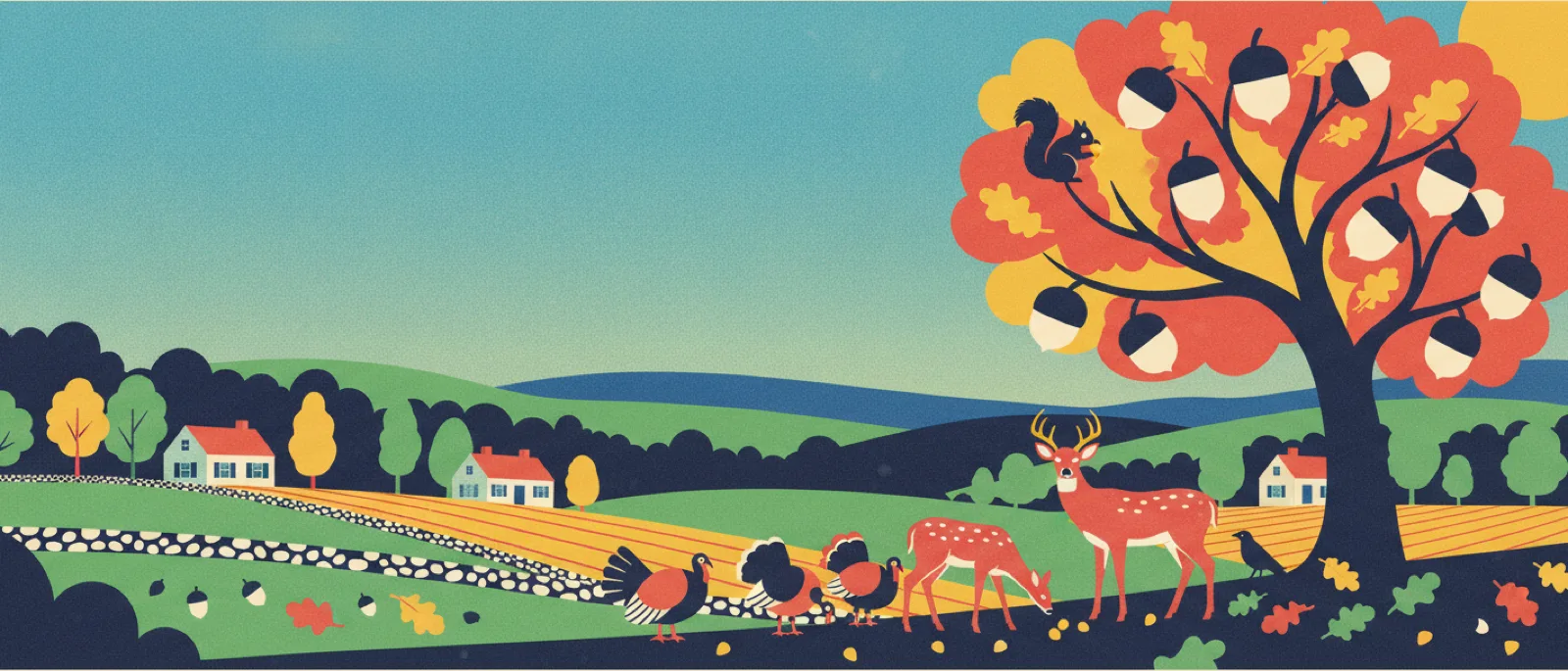
Right outsideMammals
Why gray squirrels bury nuts one by one each fall
When: September to November
Each fall gray squirrels bury nuts one by one across yards and woods, and the caches they never reclaim can sprout into oaks, hickories and walnuts.
Why this time of year
Burying season arrives with the falling nuts: as acorns and hickory nuts begin dropping in early fall, gray squirrels shift into weeks of scatter-hoarding ahead of winter, so late summer is the last quiet stretch before yards fill with digging.
How to notice it
- Follow one squirrel carrying a nut with your eyes until it stops, digs and presses the nut into the ground.
- Watch it tamp the spot down, then carry the next nut somewhere new instead of back to the same hole.
- Check under oaks and hickories, where falling nuts draw the most burying.
Try this with kids: Can you keep your eyes on one squirrel until you see exactly where it buries a nut?
scatter-hoarding: burying food in many small spots instead of one big store
Safety
- Watch from a distance and never hand-feed squirrels or any other wildlife.
Sources
- canr.msu.eduEastern gray squirrels scatter hoard, burying small amounts of seed in various locations as they prepare for winter in fall; they rely on smell to recover caches but do not always claim everything; seeds of oaks, walnuts and hickories benefit and end up sprouting, aiding forest regeneration.
- pmc.ncbi.nlm.nih.govScatter-hoarding rodents leave some cached seeds unrecovered, and incomplete recovery likely benefits plant establishment; mechanism-level support for the buried-seeds-become-trees claim (study species is a kangaroo rat, not a squirrel).
In the guide for September, October, November