Look closerPlants
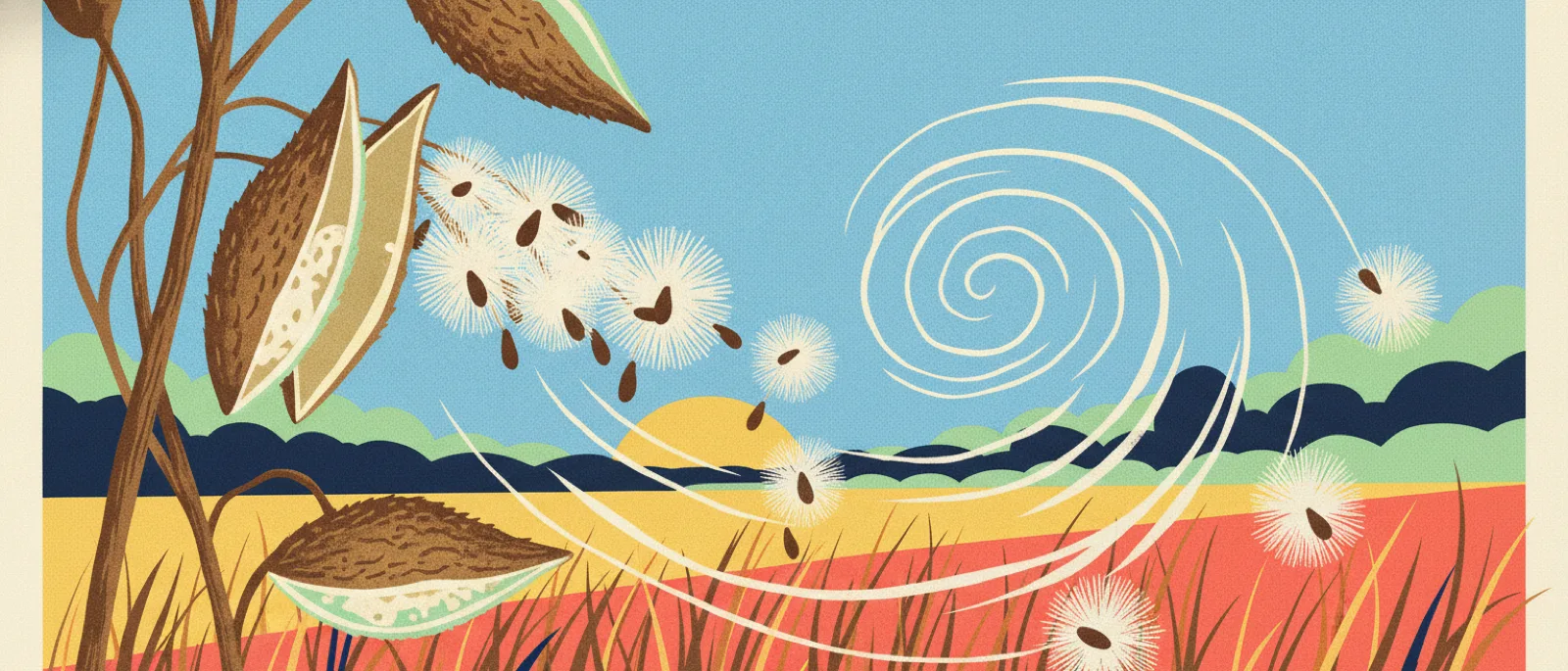
Milkweed pods splitting open to release silky seeds
When: August to October
Common milkweed pods along Massachusetts roadsides and meadow edges split in late summer and early fall, each releasing a hundred or more seeds on silky parachutes.
Why this time of year
Milkweed's launch window is open: pods that fattened all summer begin splitting in late summer and early fall here, best watched on a breezy afternoon.
How to notice it
- Find the warty, finger-length pods on milkweed along a roadside or meadow edge.
- Watch a split pod on a breezy day and follow one seed as far as your eyes can track it.
- Look closely at how each silk tuft fans open the moment a seed lifts off.
- Count how many seeds one pod still holds, without pulling it open.
Try this with kids: What features make a seed good at traveling on wind?
the silky tuft on each seed is called a coma and works like a parachute
Safety
- Milkweed contains toxins; look and watch, never taste any part, and wash hands after touching a plant.
- Do not collect pods or plants, especially from protected land.
Sources
- fs.usda.govPods are about 10 centimeters (4 inches) long and covered in finger-like projections; they split open revealing 50-100 seeds, each with a white fluffy coma that allows wind dispersal; grows on roadsides, fields, and fence rows across the eastern United States
- massaudubon.orgIn Massachusetts the seed pods release a hundred or more seeds flying on silky parachutes in late summer and early fall; the plant's toxins are what make monarch caterpillars and adults poisonous to vertebrate predators
In the guide for August, September, October