Look closerPlants
Acorn crops, and why a heavy year draws wildlife under the oaks
When: August to November
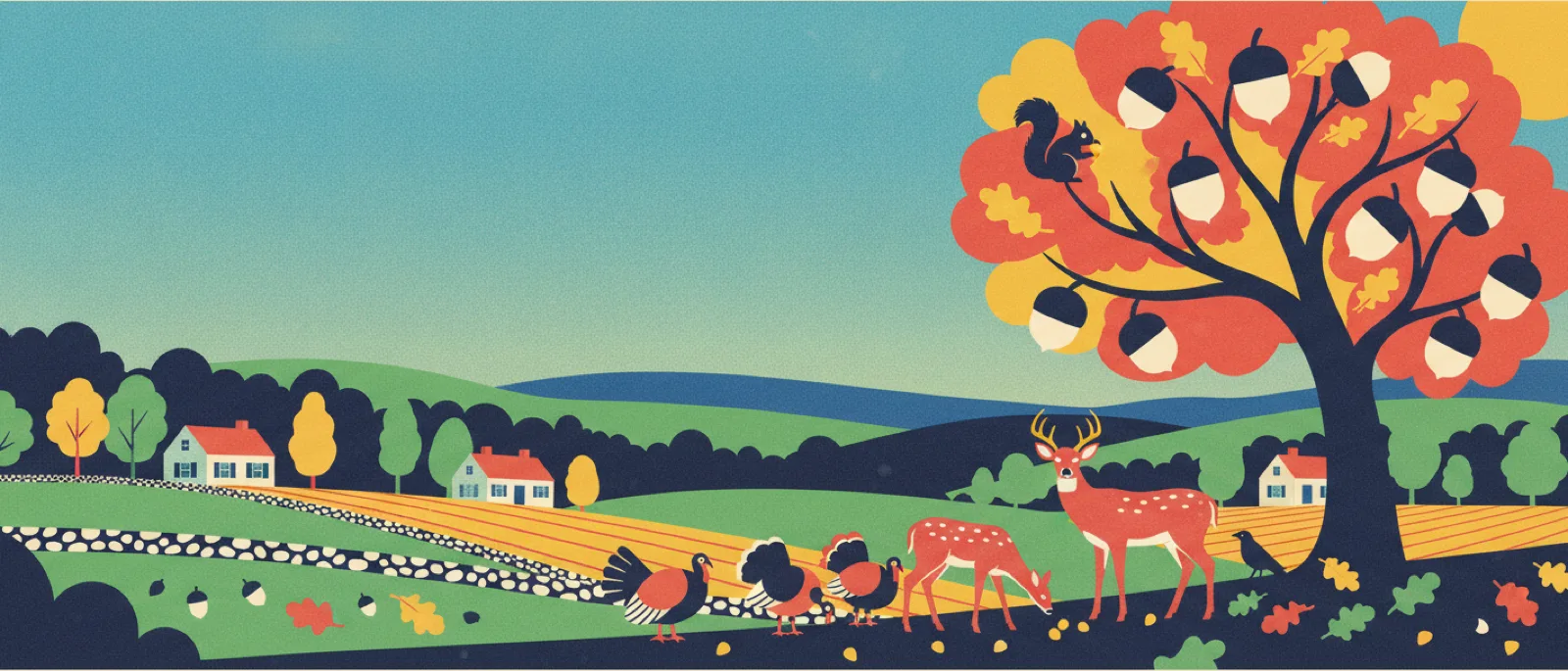
Oak acorn crops swing widely from year to year and from tree to tree, and a heavy year concentrates squirrels, deer, turkeys and more wherever the acorns fall.
Why this time of year
This year's acorn crop is already set in the oak canopy, and late summer is when foresters run their acorn surveys, so an August walk under eastern Massachusetts oaks is an early read on the fall that wildlife is about to have.
How to notice it
- Compare the ground beneath several different oak trees, not just one.
- Look up as well; acorns show in the canopy before they drop.
- Do not draw a regional conclusion from one tree; single oaks vary enormously, and a few trees produce most of the acorns.
Try this with kids: Which tree seems to be feeding the most animals this year?
mast: the crop of nuts trees produce in a year; a mast year is a synchronized bumper crop
Sources
- research.fs.usda.govUS Forest Service white oak masting study: acorn production varied by site and year and was highly variable among individual trees; about one-third of trees produced roughly 75 percent of acorns while half were poor producers; there is no accurate predictor of acorn yield, and acorn surveys are run in late summer, which supports both the variability framing and the August start month.
- extension.unh.eduBumper acorn crops occur on average about two years in ten; mast years let squirrels, deer and turkeys enter winter with fat reserves and ripple into predator populations the following year; acorns fall in autumn.
In the guide for August, September, October, November