Look closerFungi
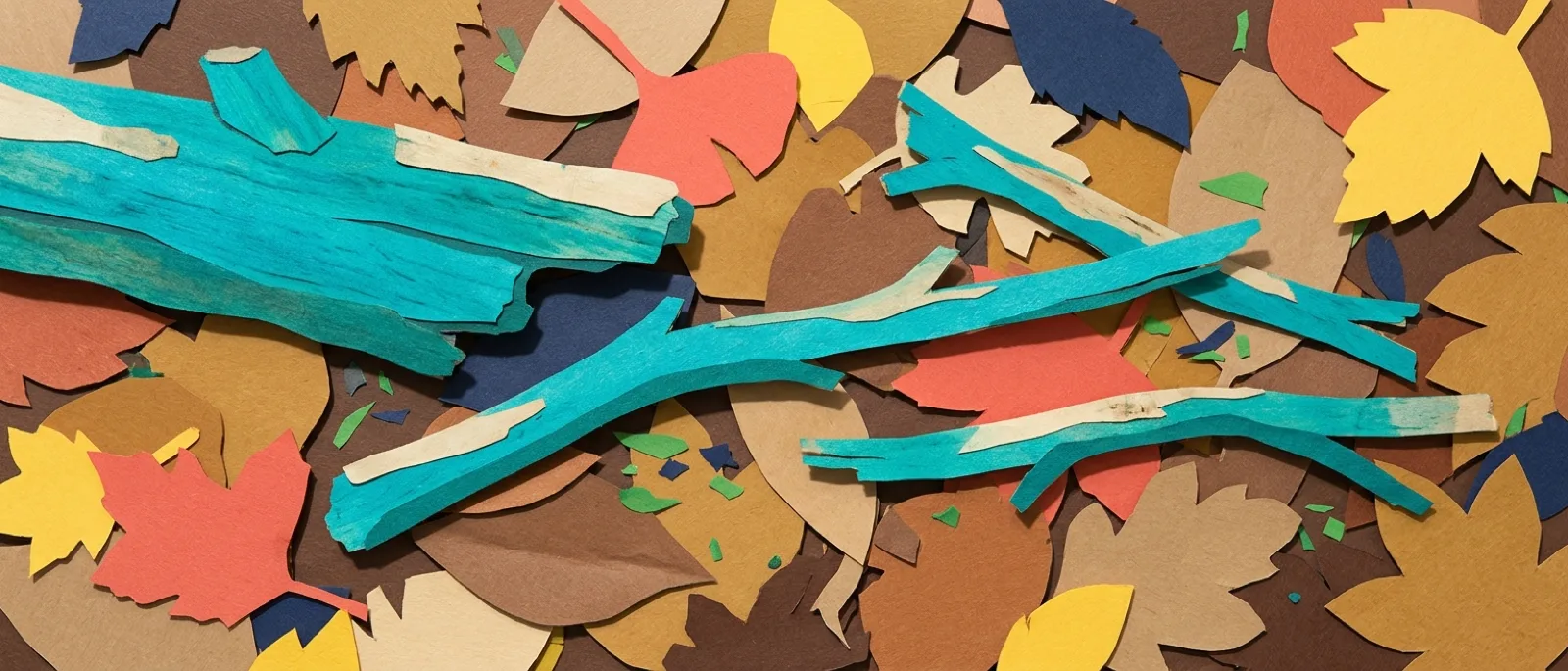
Blue-green stained wood from the Chlorociboria fungus
When: All year
Some fallen sticks and logs in the woods are stained a bright blue-green, and the color comes from a small cup fungus called Chlorociboria. The stained wood can turn up in any month when the ground is bare, but the tiny turquoise cups the fungus grows show up much less often, mostly in summer and fall.
Why this time of year
The stain stays in the wood all year, so a walk in the woods when the ground is free of snow can turn some up. Well-rotted sticks and logs without bark are where to look.
How to notice it
- On a woodland walk, scan the ground for old fallen sticks and logs that have lost their bark and are well rotted.
- Look for wood colored turquoise or blue-green.
- In summer and fall, look closely at the stained wood for tiny turquoise cups, from 1 to 15 millimeters across.
- Look, then leave the wood where you found it.
Try this with kids: How many blue-green sticks can you spot without touching any of them?
Good to know: Xylindein, the blue-green pigment the fungus makes that colors the wood.
Sources
- mushroomexpert.comSpecialist reference (Michael Kuo, page dated 12 August 2026). Covers the wood, the year-round stain, when the cups appear, the two North American species, and that the cups are rarely found: 'Saprobic on well-decayed, barkless logs and sticks, including those of both hardwoods and conifers; evident as blue- to green-stained wood year-round, but the fruiting bodies typically appear in summer and fall'; 'In North America we have two species of Chlorociboria'; 'These little blue cup fungi fruit infrequently'. Cup size: '1-15 mm across'; upper surface 'turquoise to pale turquoise'. The page's own collections come from Michigan, North Carolina, Ohio, and Pennsylvania, not New England.
- mycoportal.orgPrimary herbarium record (Cornell CUP-070800) placing the fungus in Massachusetts on a hardwood: 'Taxon: Chlorociboria aeruginascens'; 'Date: 2010-09-18'; 'Locality: United States, Massachusetts, Worcester'; 'Substrate: on well rotted Betula log'.
- api.gbif.orgPrimary dataset (GBIF API, queried 2026-11-10). It holds 40 Chlorociboria preserved specimens from Massachusetts, and the months below are when they were collected (fruiting): Feb 1, Apr 1, May 1, Jul 6, Aug 14, Sep 5, Oct 5, Nov 3. These are clustered in July to October, which fits Kuo's 'summer and fall'.
- api.gbif.orgPrimary dataset (GBIF API, queried 2026-11-10; 188 records, almost all iNaturalist research grade). It lists Massachusetts observations in every month: Jan 5, Feb 8, Mar 26, Apr 18, May 8, Jun 3, Jul 4, Aug 18, Sep 24, Oct 42, Nov 21, Dec 11. This is the evidence that people find it in Massachusetts during the winter months. I did not open the photos to check whether each winter record shows stained wood or cups.
- pmc.ncbi.nlm.nih.govPeer-reviewed paper (Journal of Fungi) naming the pigment: 'The soft rot fungus Chlorociboria aeruginascens produces a blue-green pigment xylindein'; 'The pigment xylindein is responsible for the color appearance'.
- pmc.ncbi.nlm.nih.govPeer-reviewed paper backing up the pigment name and the historical use: 'Beginning in the 15th century, wood stained blue-green by fungi from the genus Chlorociboria was a prized commodity in fine woodworking'; 'the blue-green pigment, named xylindein'.
Checked against these sources on November 10, 2026.