Look closerFungi
British soldier lichen and its bright red caps
When: All year
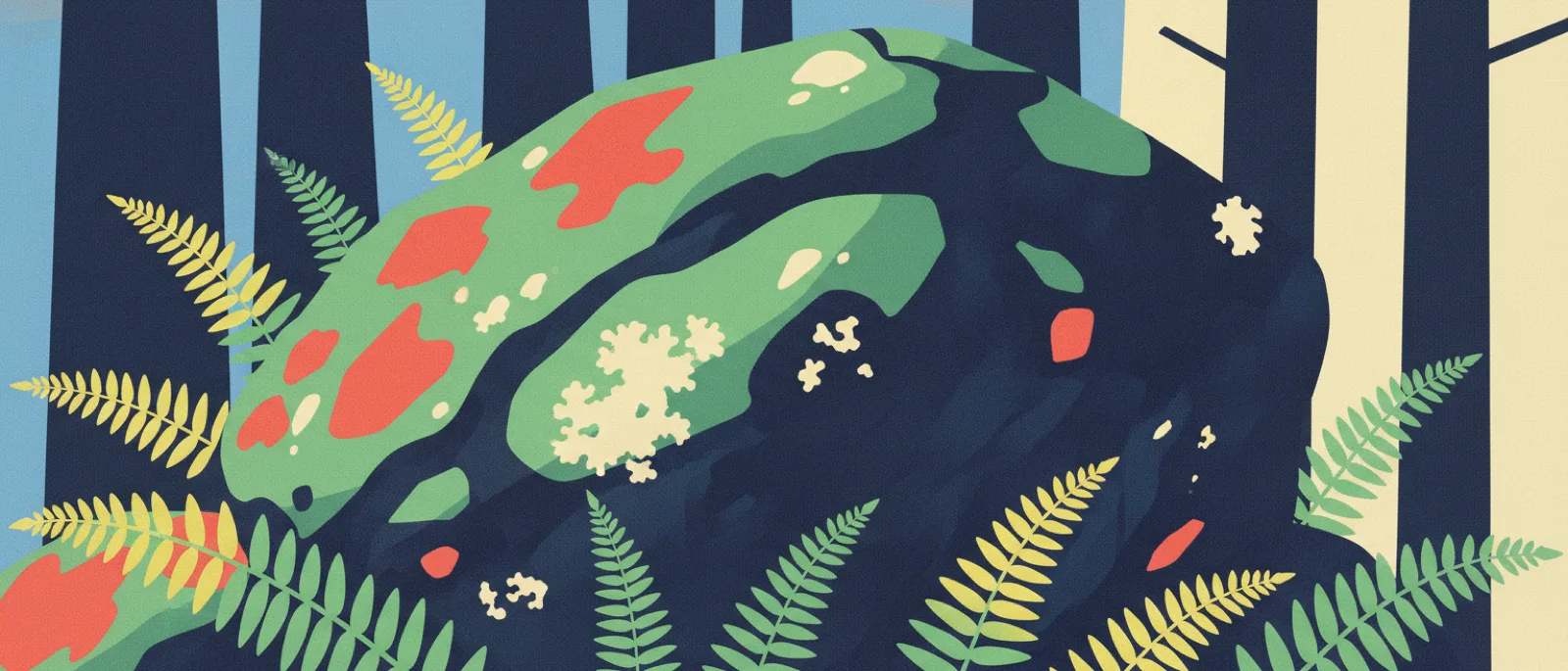
British soldier lichen (Cladonia cristatella) is a pale green lichen with tiny stalks, each tipped with a bright red ball. Look for it on old stumps, rotting logs, mossy ground and weathered fence posts.
Why this time of year
A lichen does not come and go with the seasons, so a patch you find is likely still there on your next walk.
How to notice it
- Check the rotting wood: old stumps, fallen logs, the base of a tree and weathered fence posts.
- Crouch down. The stalks are usually under an inch tall, pale green, and often branch at the top.
- Find the red caps on the tips. Count how many branches carry one. Other small lichens can have red tips too, so treat this as a good first guess.
- Look, do not pick: these lichens are among the first to disappear when their habitat is disturbed.
Try this with kids: Can you find a patch of tiny soldiers with red hats? How many red caps are in one patch?
Word to know: A “lichen” is a fungus and an alga living together as one; the red caps are the fungus's spore-making parts (apothecia).
Sources
- mdc.mo.govMissouri Dept of Conservation (state agency). Grows on soil amid humus or rotting wood and on wood or bark at tree bases; podetia usually under 1 inch; tipped with rounded bright red spore-bearing apothecia; common and widespread throughout eastern North America.
- northernwoodlands.orgNorthern Woodlands (nonprofit, not on roster). Typically found close to the ground on stumps, tree bases, mossy areas, boulder crevices; pale green branches; red tops are apothecia; fungus partners with alga Trebouxia erici.
- chippewa.extension.wisc.eduUW-Madison Extension. Lichen is a symbiotic union between a fungus and an alga and/or cyanobacterium; describes the green lichen with a red cap known as British Soldier on weathered fence posts on Cape Cod dunes (Massachusetts).
- today.wisc.eduUW-Madison event listing (weak). Lichens described as very hardy (visible year-round); supports year-round presence only generally, not this species.
Checked against these sources on October 13, 2026.