Right outsideSky
Geminid meteor shower: the one you can watch before bedtime
When: December
Every other major shower asks you to stay up past midnight. The Geminids peak on December 13-14 and are already going in the early evening, and the few you see first are the best ones of the night.
Why this time of year
AMS gives the activity period as December 4-17 with the peak on the night of December 13-14, and Gemini is well placed from about 10pm onward. That is the only major shower of the year a young child can be awake for.
How to notice it
- Go out in the first hour of full dark. AMS says you will see only about 5 in that hour, and that is the point rather than the problem.
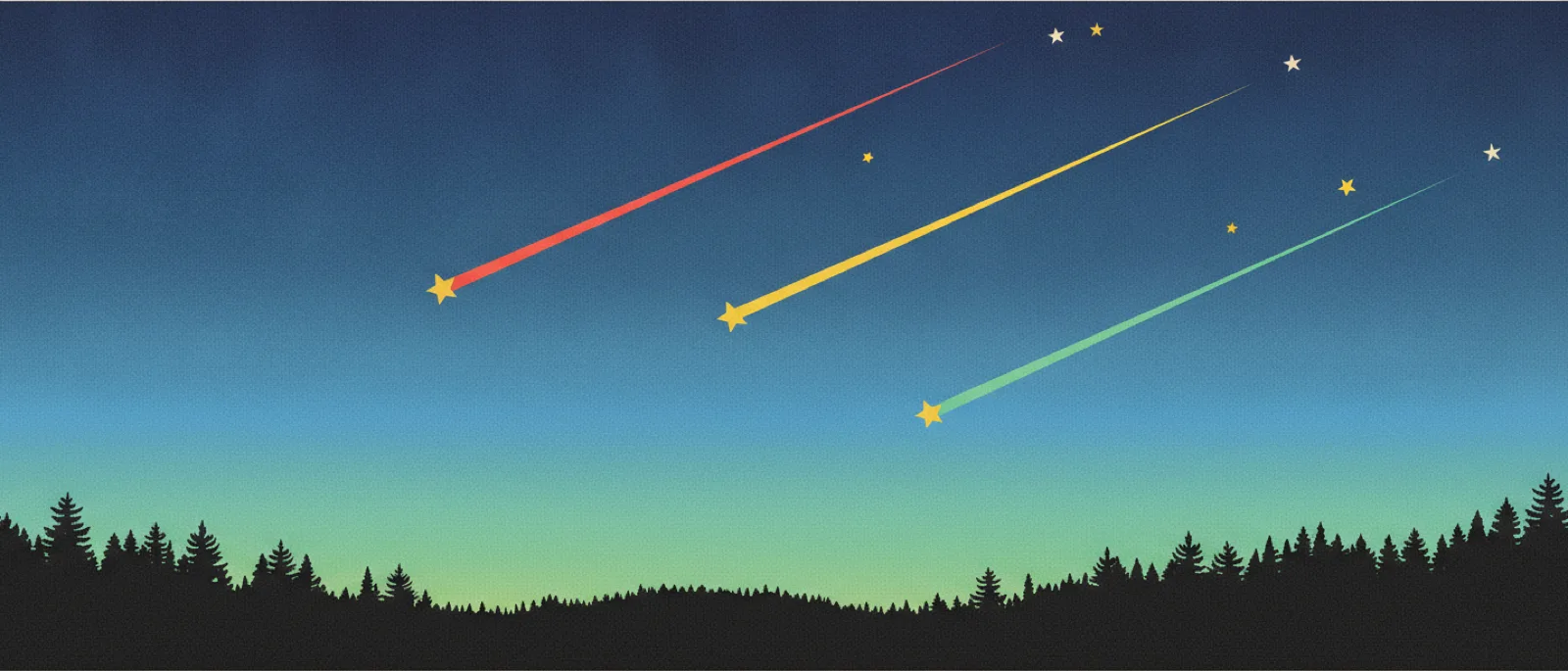
- Those early ones are earthgrazers: they skim the atmosphere instead of dropping into it, so they last several seconds instead of a flash, and they draw a long line across the sky.
- Later in the evening there are more of them and they get quicker and shorter. Trading spectacle for numbers is a real choice you can make.
- Face away from any light you can, give your eyes half an hour, and take in as much open sky as you can rather than staring at one spot.
Try this with kids: Count out loud how long one lasts. The early ones can go on for several seconds.
an earthgrazer is a meteor that comes in at a shallow angle and skims the upper air instead of plunging into it, which is why it lasts so much longer
Safety
- Cold is the real hazard on a December meteor night. Dress for standing still, not for walking.
Sources
- amsmeteors.orgGeminids activity period December 4-17, peak December 13-14, ZHR 150, radiant 07:28 +33, parent body 3200 Phaethon (an asteroid); the one major shower providing good activity prior to midnight as Gemini is well placed from 22:00 onward
- amsmeteors.orgDuring the first hour of the night only 5 or so Geminids will be seen but they are more impressive, skimming the atmosphere rather than penetrating deeply, lasting several seconds rather than the normal sub-second duration; under a dark rural sky up to 30 can be seen around 10pm with the radiant halfway up the eastern sky; up to 60 from dark rural sites around 2am at maximum
In the guide for December