Look closerSky
Earthshine: the faint glow on a crescent Moon's dark side
When: All year
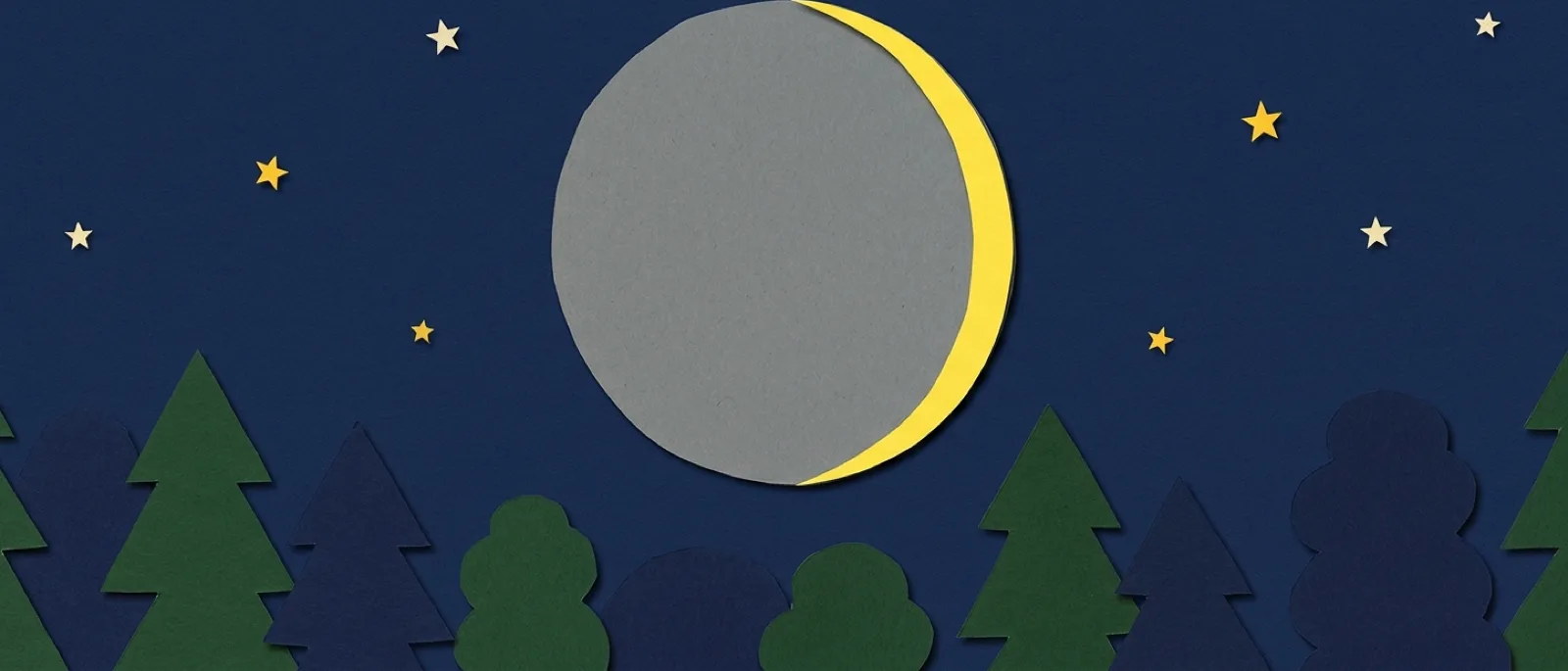
On a thin crescent Moon, the dark part of the disk can glow faintly. That glow is sunlight that first bounced off Earth and then lit the Moon's night side.
Why this time of year
A thin crescent returns every lunar month, so there is a window of a few days around each new moon when the dark side may show. Look in the west after sunset in the days after new moon, or in the east before dawn in the days before it.
How to notice it
- In the few days after new moon, look low in the western sky just after sunset for a thin crescent. In the few days before new moon, look low in the eastern sky before sunrise.
- Find the bright crescent first, then let your eyes rest on the dark part of the disk for a minute. A faint grayish glow may fill in the rest of the circle.
- Try blocking the bright crescent with your thumb held at arm's length.
- Check again over the next two or three evenings while the crescent is still thin.
Try this with kids: Can you see the whole round Moon, even though only a thin edge is bright? Cover the bright edge with your thumb and look for the soft gray glow.
Word to know: “Earthshine” is sunlight that reflected off Earth and landed on the Moon's night side.
Sources
- earthsky.orgEarthSky: earthshine is light reflected from Earth on the unlit part of a crescent Moon; look for a thin crescent the few days before and after new moon; east before dawn before new moon, west after sunset after it; most commonly visible in spring.
- science.nasa.govNASA APOD 2018-01-20: earthlight reflected onto the Moon's night side (ashen glow); when the Moon is a slender crescent in Earth's sky, a nearly full Earth is seen from the Moon. Does not say where in our sky to look.
Checked against these sources on October 20, 2026.