Right outsideMammals
Deer rut peak: why deer move by day in the first half of November
When: October to November
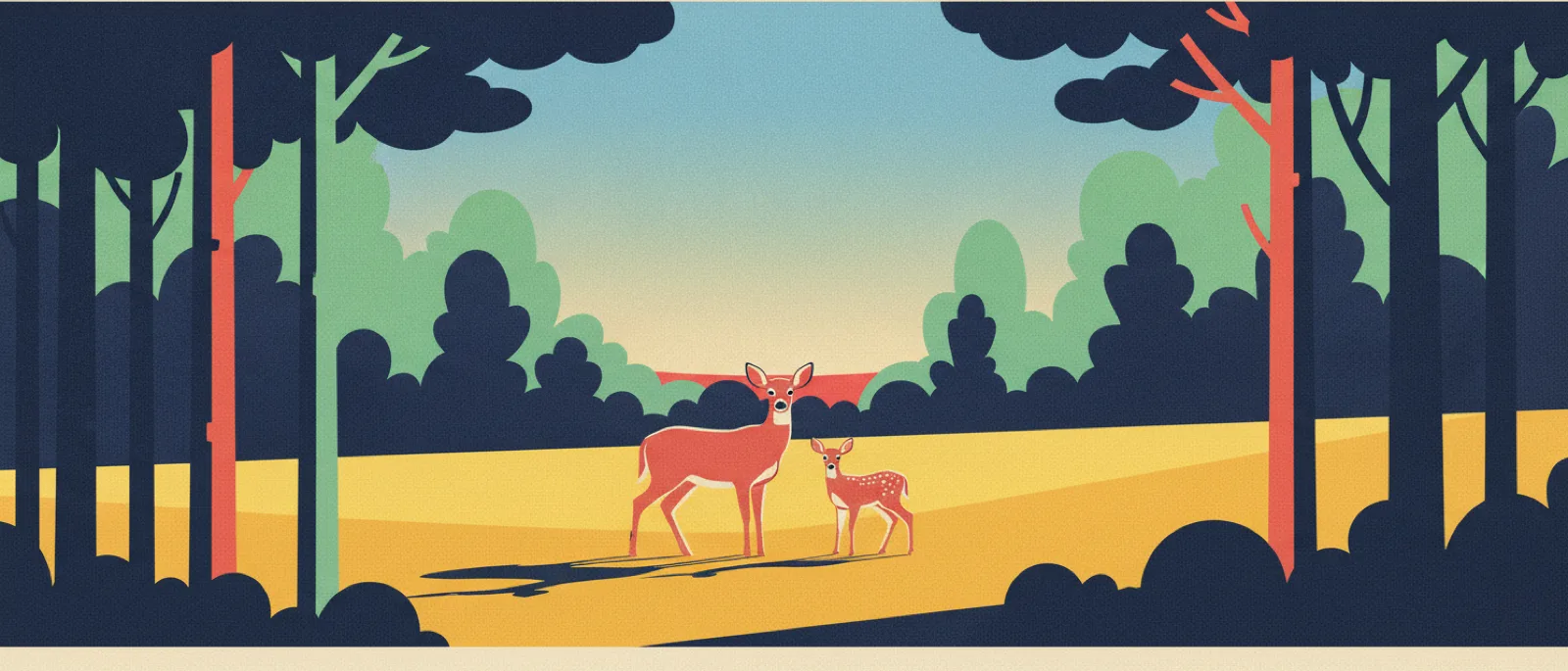
For about two weeks the deer abandon their usual dawn-and-dusk routine and move at any hour. It is the rut, and the thing that sets its clock is not the cold. It is the length of the day.
Why this time of year
MassWildlife puts the peak between November 6 and November 20. Before that, through late September and October, the bucks are marking: rubbing trees, scraping the ground, leaving scent. Both halves are visible if you know to look.
How to notice it
- Look for rubs on saplings: a patch of bark scraped away at about waist height, bright against the trunk.
- Look for scrapes on the ground, a cleared oval of bare earth under a low branch.
- In the first half of November, expect deer at any hour rather than only at dawn and dusk.
- Drive slowly, especially at dusk. Deer are distracted during the rut and this is when they are hit.
Try this with kids: Find a young tree with its bark rubbed off on one side. How high up does it go?
the rut is the deer breeding season, when males chase females and stop being careful
Safety
- This is the seasonal spike in deer-vehicle collisions. Slow down at dawn and dusk, and if one crosses, expect another behind it.
- Give any deer a wide berth and keep dogs close; the animals are preoccupied and unpredictable.
Sources
- mass.govMassWildlife: in Massachusetts the peak rut is between November 6 and November 20; timing is related to the period of daylight and has nothing to do with temperature, rain, snow or moon phase; pre-rut late September to October, when bucks mark territory by rubbing trees, scraping the ground and depositing scent; during the rut deer abandon their habit of bedding down during the day and move around in search of a mate; some bucks lose up to 20 percent of their body weight; both sexes move more and are more distracted, leading to a seasonal spike in deer-vehicle collisions
In the guide for October, November