Listen forAmphibians
Why spring peepers call again in autumn from dry woods
When: September to November
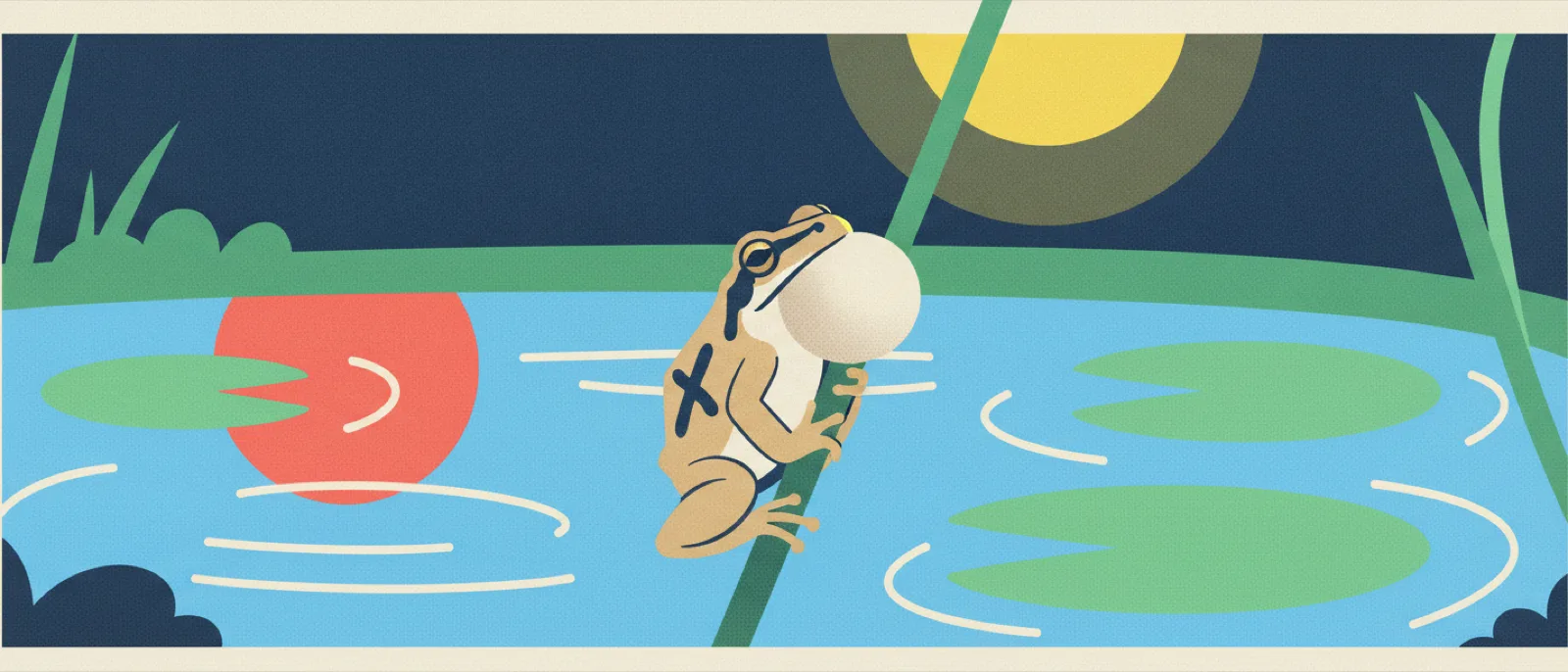
Spring peepers, the tiny frogs behind the deafening spring chorus, call again in autumn from dry upland woods rather than from breeding ponds. It is a single small peep with long silences around it, and most people who hear it go looking for a bird.
Why this time of year
Warm damp stretches in autumn hand peepers a set of cues that resemble early spring: short days, a low sun, cool air and rain. The frogs are already back in the woods where they will overwinter under the leaves, and some of them answer. It is not breeding and it does not build into a chorus.
How to notice it
- Pick the tail end of a mild rainy day, ideally after it has been warm and wet for a day or more. Late afternoon into dusk is the window.
- Stand still on a wooded trail well away from any pond, and listen down toward the ground rather than up into the canopy. Autumn callers are in the leaf litter, not at the water.
- Wait longer than feels reasonable. Spring gives you a wall of sound; autumn gives you one peep, then a long gap, then maybe another from a different direction.
- If you already know the gray treefrog's long musical trill, it is easy to rule out. If you do not, treat any trill as unidentified rather than as a peeper.
Try this with kids: Count the seconds between one peep and the next. Do it three times. Is the frog keeping a beat, or is it random?
calling outside the breeding season, from the wrong place and the wrong month, is a documented habit that biologists have not settled on an explanation for
Safety
- Listen, do not dig. The leaf litter these frogs are calling from is the same litter they will freeze into for the winter.
Sources
- northernwoodlands.orgNorthern Woodlands, The Outside Story, Michael J. Caduto. Fall peeper calling comes from the deep woods and from under the leaf litter rather than from breeding wetlands, runs from late July until well after leaf fall, and is triggered by stretches of warm wet autumn weather producing spring-like cues. Records a chorus on November 25 2004 and calls on December 24 2015 across seven Vermont towns. Also the source for the bird-confusion premise, birders hunting with no success for the bird making the noise.
- oriannesociety.orgThe Orianne Society: fall calling is sporadic, just a peep here and there, from dry woodland settings rather than breeding wetlands, triggered by cooler or wetter days when short days, cool air and heavy rain mirror spring. States plainly that WHY peepers call in the fall at northern latitudes is not exactly known, then lists three candidate explanations.
- vtherpatlas.orgVermont Reptile and Amphibian Atlas, Jim Andrews. A fall caller is a single frog rather than a breeding aggregation. Wood frogs and leopard frogs calling in autumn are anecdotal, reported by a few people and on rare occasions, which is why this entry names the peeper rather than saying 'a frog'. The gray treefrog is the routine late-summer and early-autumn caller and its call is quite different from a fall peeper call IF YOU ARE ALREADY FAMILIAR WITH IT, which is the hedge this entry now carries.
- vtherpatlas.orgVermont Reptile and Amphibian Atlas species account: late-summer through autumn calling from leaf litter is part of the species account rather than a one-off observation, and the autumn call sounds harsher and shorter than the spring one.
- nps.govNational Park Service: the classic peep can be heard occasionally on warm nights in October or November. Independent agency confirmation, and one of the supports for including November.
- mcht.orgMaine Coast Heritage Trust: the phenomenon from a fourth northeastern state, confirming the sporadic structure, just a handful of peeps at a time from scattered individuals along woodland trails, and naming the trigger as short days, low sun angle, increasing rainfall and cooler temperatures.
Checked against these sources on September 6, 2026.
In the guide for September, October, November