Look closerPlants
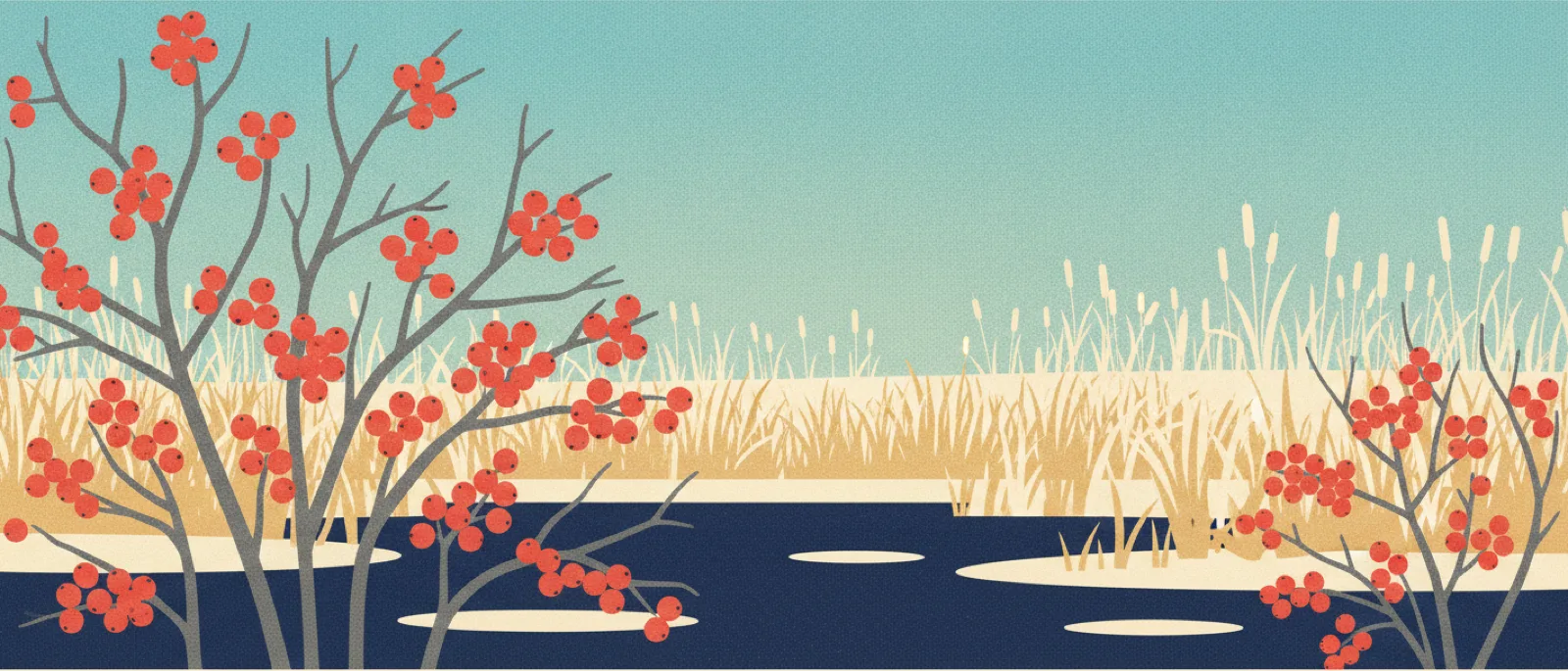
Winterberry holly: red berries on bare branches in wet ground
When: November to January
Winterberry is a holly that drops its leaves, so by late autumn the fruit is left standing naked on grey twigs in the swampy places, and it holds there into winter.
Why this time of year
The leaves are gone and the fruit is not, which is the whole effect. It ripens from late summer through December and persists into winter, so this is the stretch when a wet thicket turns red from a distance.
How to notice it
- Look at the wet edges: swamp margins, pond edges, damp thickets. This is a wet-feet shrub.
- The berries sit directly against bare grey twigs, not among leaves. That is what separates it from the evergreen hollies.
- Find a winterberry with no fruit at all. Only female plants fruit, and only if a male is growing near enough to pollinate them.
- Come back after a flock has been through and see how fast a bush is stripped. Over 48 bird species eat these.
Try this with kids: Can you find one bush covered in berries and another with none at all?
deciduous just means it drops its leaves for winter, which most hollies do not
Safety
- Look, do not taste. The fruit and leaves can cause vomiting or diarrhea in people, though birds eat them freely.
Sources
- plants.ces.ncsu.eduIlex verticillata is deciduous; fruits ripen August through December and persist into winter, striking on bare branches; berries require cross-pollination and a male pollinizer planted within 50 feet of female plants; fruits eaten by over 48 species of birds including cedar waxwings and by small mammals; low-severity poison, ingestion of fruit or leaves may cause vomiting, diarrhea or other illness in humans due to saponins
In the guide for November, December, January