Look closerFungi
Slime mold on the mulch after rain: the yellow blob explained
When: June to September
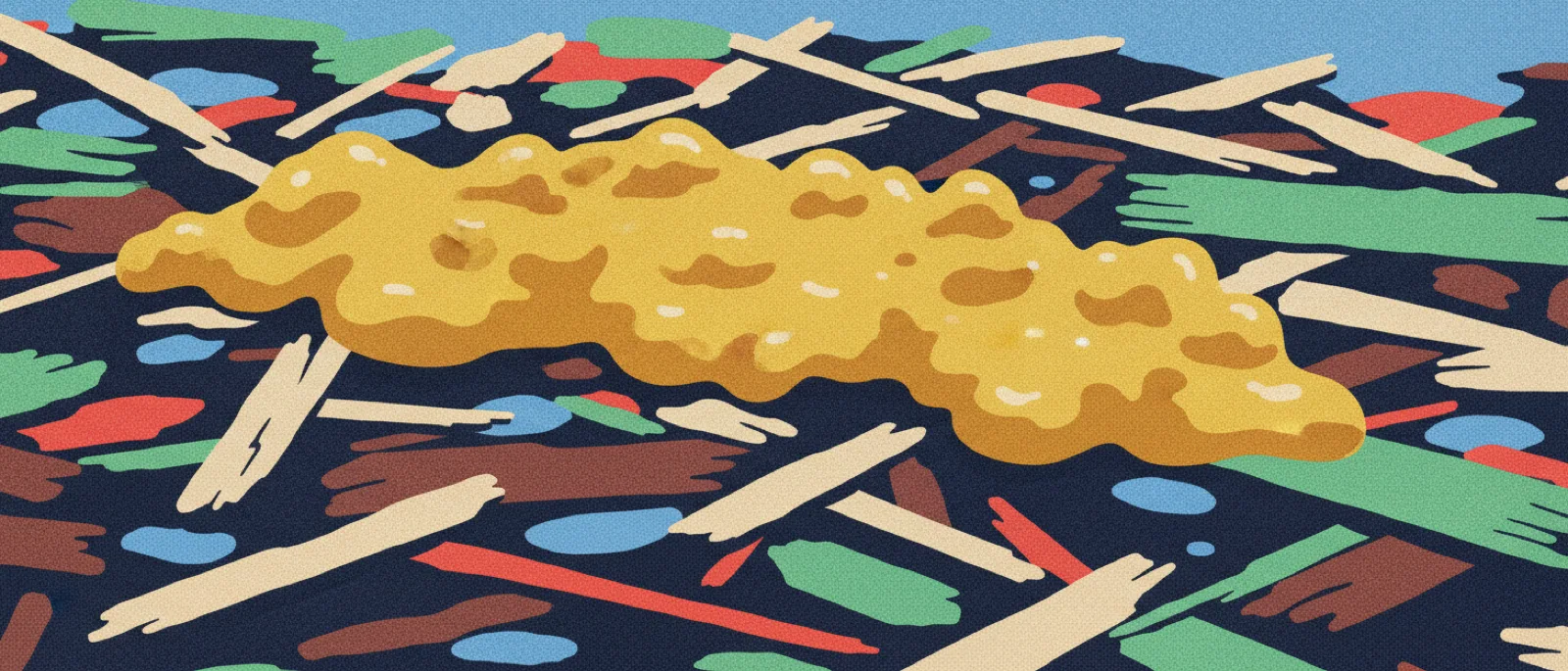
That bright yellow blob that appeared on the mulch overnight is a slime mold: not a fungus but a giant single cell that actually creeps, eats like an amoeba, then dries into a crusty brown spore mass.
Why this time of year
Warm, wet stretches from late spring to fall are their trigger, and the spores germinate after heavy rain, so the day or two after an August soaker is exactly when a blob appears.
How to notice it
- After warm rain, scan bark mulch, dead leaves, and rotting logs for a sudden bright yellow or scrambled-egg patch.
- Mark its edge with a twig and check back in a few hours; the whole organism can slowly move.
- Watch the transformation over a day or two: vivid yellow to hardened reddish brown crust.
- Poke the dry crust with a stick to see spore dust; then leave it, since it needs no treatment and hurts nothing.
Try this with kids: Put a twig at the blob's edge; did it move past the twig by dinner?
a plasmodium is one giant cell made of many cells that fused, and it can crawl
Safety
- Fine to look and poke with a stick; not for eating, like anything found on mulch.
Sources
- extension.umaine.eduSlime molds develop during warm moist weather from late spring to fall, most commonly on hardwood bark mulch, dead leaves, and decaying wood; they are not fungi but single-celled amoeba-like organisms that fuse into a plasmodium; the most prevalent species is a vibrant yellow that transitions to a hardened reddish-brown; they are harmless to most plants, pets, and for the most part humans, will not attack living plants, and no pesticide is recommended.
- extension.unh.eduSlime molds emerge after extended wet weather; slime mold is not a fungus but an ancient lineage of amoebas; single cells fuse to form a giant cell called a plasmodium, which actively relocates unlike stationary fungi; largely harmless in the landscape, and fungicides are both unnecessary and ineffective.
- hort.extension.wisc.eduSlime molds are more closely related to amoebas than fungi; the organism is a lumpy mass of protoplasm called a plasmodium that moves and eats like an amoeba; the common one looks like dog vomit or scrambled eggs; spores germinate after a heavy rain; slime molds do not cause diseases.
In the guide for June, July, August, September