Go seeSky
Perseid meteor shower 2026: a dark peak night, August 12 to 13
When: August
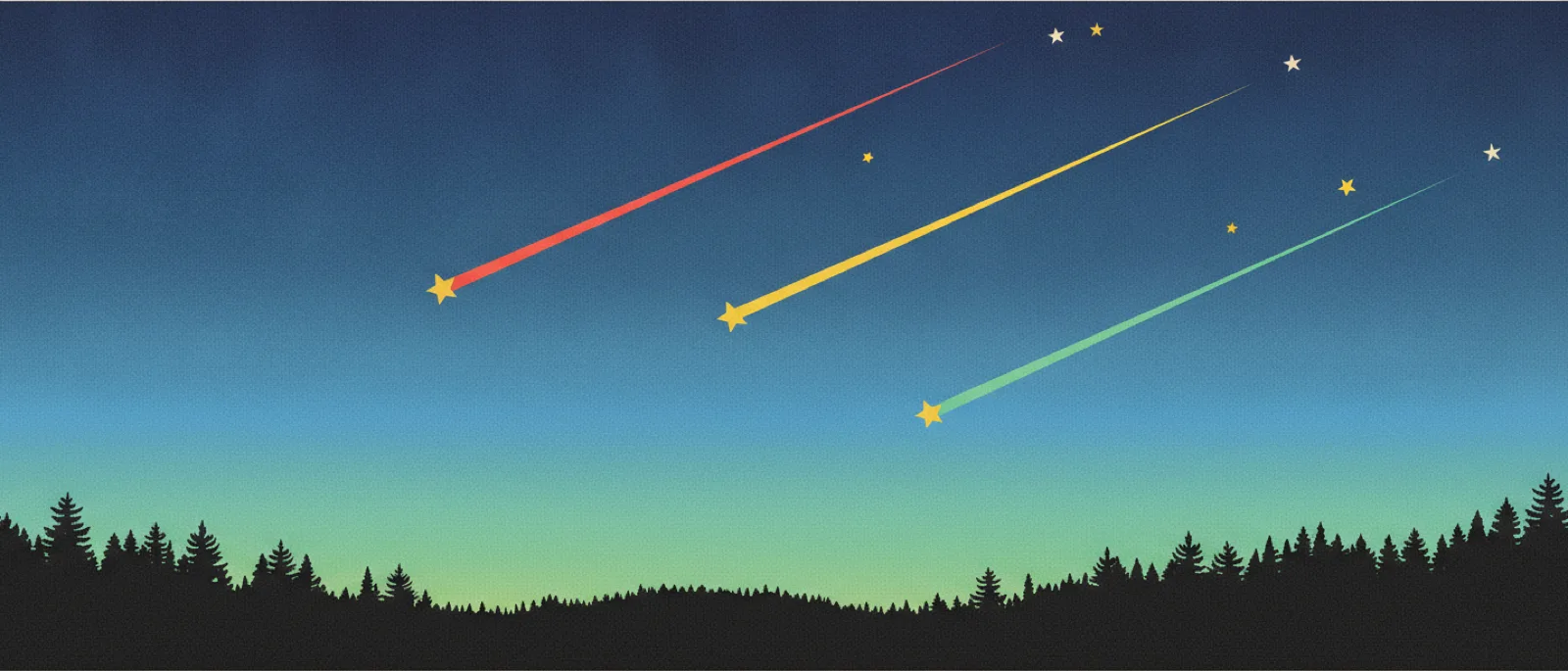
A new moon keeps the peak night of August 12-13 dark, and meteor rates climb steeply after midnight.
Why this time of year
The 2026 peak runs the evening of August 12 into the early morning of August 13, and the new moon arriving that same night leaves the sky as dark as this shower ever gets.
How to notice it
- Choose the darkest spot with the widest view of open sky you can reach.
- Give your eyes about 30 minutes to adjust, with phone screens off.
- Face roughly northeast so the radiant sits at the edge of your view, and take in as much sky as you can.
- Plan on at least an hour; expect about 5 meteors per hour in the evening, 10 by midnight, and nearly 40 by 3 am at a dark site.
Try this with kids: Can you point to the one spot in the sky all the meteors seem to fly out from?
the radiant is the point in the constellation Perseus that Perseid meteors appear to stream away from
Safety
- If you drive somewhere darker, park fully off the road and keep kids close in the dark.
Sources
- amsmeteors.orgPeak night August 12/13 2026; new moon on peak night; rates of 5 per hour in the evening, 10 by midnight, nearly 40 by 3 am local daylight time; radiant in Perseus; keep the radiant at the edge of your field of view; watch for a minimum of one hour.
- science.nasa.govPeak the evening of Aug 12 into the early morning of the 13th with a new moon arriving on the 12th; look toward the northeast once fully dark; allow 30 minutes for dark adaptation; meteors are debris from Comet Swift-Tuttle burning up in the atmosphere.
In the guide for August