Look closerMammals
Muskrat push-ups: plant mounds on marsh ice
When: December to February
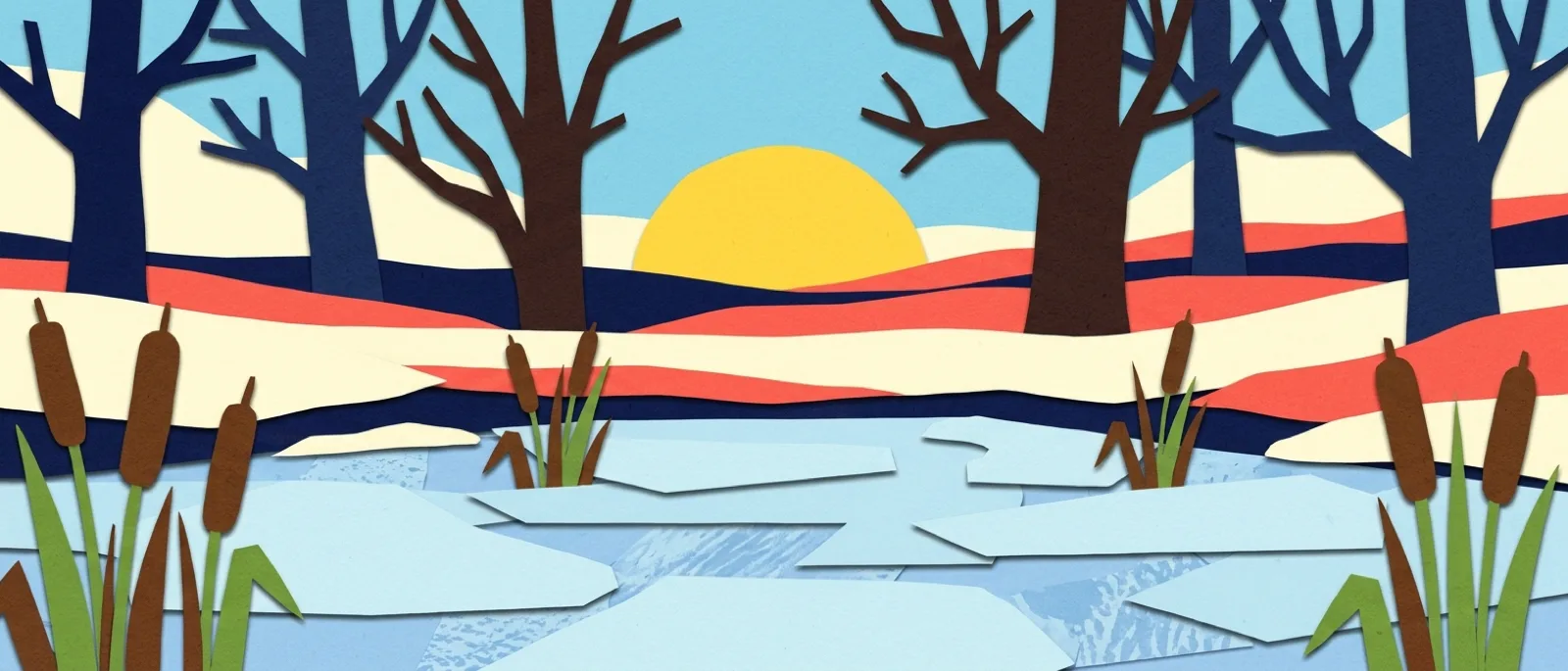
When a cattail marsh or pond freezes, muskrats gnaw holes in the ice and push plants up through them into small dome-shaped mounds called push-ups. Look for dark lumps on the ice from the bank: each one is a rest stop and feeding spot for a muskrat swimming below.
Why this time of year
Once a marsh or pond edge has frozen over, muskrats are working under the ice and keeping their push-ups open by using them again and again.
How to notice it
- Stay on the bank or shoreline path and scan the frozen cattail edge, ideally with binoculars, for small dark dome-shaped lumps sitting on the ice.
- Compare what you see: a push-up is a low mound of marsh plants and mud on the ice surface, while a lodge is a bigger, firmer pile of cattails and mud resting on the marsh bottom.
- Look for several push-ups spaced out across the same marsh. Each one usually has room for just one muskrat, and they can sit far out from the lodge.
Try this with kids: From the bank, count the dark lumps on the ice with your eyes or binoculars, and guess which one a muskrat might pop up in for a snack and a breath of air.
Word to know: A “push-up” is a small dome of marsh plants a muskrat piles over a hole it gnawed in the ice.
Safety
- View from the bank only. Never walk or step onto ice to reach or get a closer look at a push-up. MassWildlife says there are no guarantees and to always consider ice potentially dangerous.
- Keep children and dogs on shore and give the animals space.
Sources
- mass.govMassWildlife (published 2025-05-01), opened by the lead in the browser pane on 2026-10-30 after the sourcing agent got 403. Quotes: 'commonly found in ponds, lakes, and marshes in Massachusetts'; 'Muskrats are active year-round in Massachusetts but will burrow deeper in the winter'; 'Muskrats are common throughout Massachusetts, but populations have been declining range-wide for more than 10 years'; listed as a Species of Greatest Conservation Need (MA State Wildlife Action Plan). Page does not mention push-ups or ice.
- northernwoodlands.orgNorthern Woodlands (New England nature column). Push-up appearance and construction; how they differ from lodges; use as eat, rest and breathe spots. Quotes: 'dome-shaped mounds of marsh plants that cover holes in the ice'; 'gnaw four- to five-inch diameter holes and push marsh plants up through the ice'; lodges 'rest on a firm base'; 'eat, rest and catch a breath of air'.
- adfg.alaska.govAlaska Dept of Fish and Game (revised 2025). Push-ups are piles of vegetation on the ice over an opening, where muskrats eat, breathe and rest; repeated use keeps them free of ice; they can freeze solid in cold, low-snow winters. Quote: 'pushups which are piles of vegetation deposited on the surface of the ice over an opening'.
- hww.caCanadian Wildlife Federation / Environment Canada factsheet. Push-ups form shortly after freeze-up, are miniature lodges with room for one muskrat, used as resting place and feeding station. Quote: 'Shortly after freeze-up, muskrats chew holes through the ice in bays and channels up to 90 m away from the lodge to create push-ups.'
- portal.ct.govConnecticut DEEP. Muskrats active year-round, spend more time in dens in winter, small feeding huts may be built in their territory. Does not mention ice or push-ups.
- cambridgeday.comLocal newspaper (not roster, corroboration only). Massachusetts presence and under-ice feeding: 'live in most of the shallow lakes, ponds, slow rivers and swamps in Massachusetts'; 'If their pond freezes over in winter, they feed under the ice and sometimes eat their push-ups.'
- mass.govMassWildlife ice strength and safety page, opened by the lead in the browser pane 2026-10-30: 'There are no guarantees. Always consider ice to be potentially dangerous.' Backs the safety note.
Checked against these sources on October 30, 2026.
In the guide for December, January, February