Look closerInsects
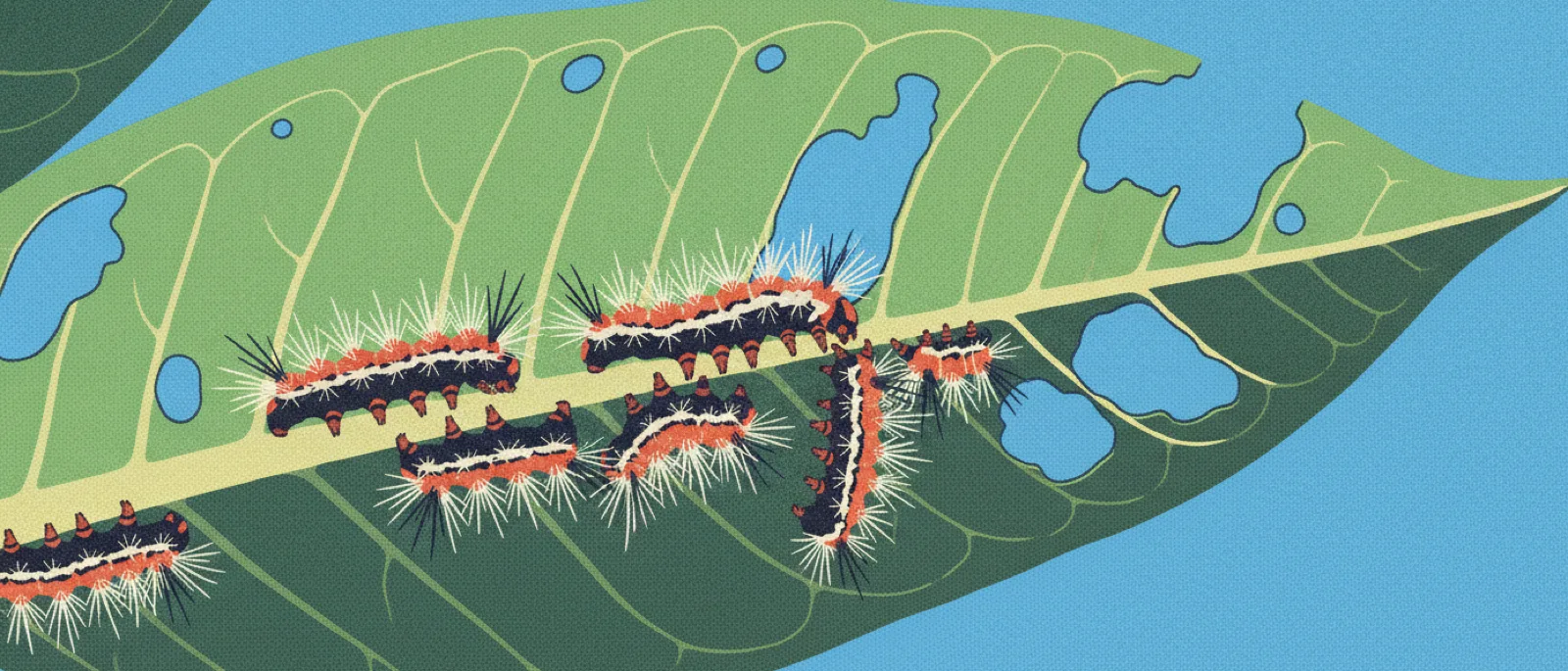
Milkweed tussock caterpillars eating milkweed leaves in gangs
When: July to September
Flip a ragged milkweed leaf and you may find a whole gang of fuzzy black, orange, and white caterpillars eating it down to lace; they are milkweed tussocks, the monarch's shaggier neighbor.
Why this time of year
Mid-to-late summer is their one northern generation, so August milkweed patches hold either the young gangs skeletonizing leaves together or the big tufted singles that have spread out.
How to notice it
- Find milkweed with ragged, lacy leaves and check the undersides; young tussocks feed in clusters of ten or more.
- Look at HOW they eat: they chew between the veins to dodge the plant's sticky latex.
- Same rule as every fuzzy caterpillar: watch the gang, do not pet the fuzz.
- They store milkweed's toxins just like monarchs do; the loud tufts are the warning label.
Try this with kids: Count the caterpillars on one leaf; is it a gang or a loner day?
skeletonizing means eating the soft leaf and leaving the veins behind like a skeleton
Safety
- Look, do not handle; the hairs can irritate skin, and one extension recommends gloves for any contact.
Sources
- hort.extension.wisc.eduThe gregarious early instars skeletonize whole leaves, feeding only on the tissues between the veins to avoid latex sap; caterpillars are visible mid to late summer with a single generation per year in the north; the moth sequesters cardiac glycosides and retains them in the adult body; third instars have thick tufts of black, white, and orange hairs; they are seldom in competition with monarch caterpillars, generally feeding on older shoots while monarchs prefer younger ones.
- hgic.clemson.eduMilkweed tussock moth caterpillars feed in clusters as early instars and are seen in late summer; like monarch caterpillars, the bright contrasting coloration signals that the body contains an accumulation of toxic cardiac glycosides from the plants; they are native and not causing actual harm; handle with gloved hands as the caterpillars have irritating hairs that can result in an uncomfortable rash.
- extension.unh.eduThe caterpillars feed gregariously in clusters of ten or more throughout their first three instars and can rather quickly consume entire milkweed plants except the stem; mature larvae are covered in thick hairs with many black, orange, and white tufts; they have evolved to eat and accumulate milkweed toxins as a defense; they evolved alongside the monarch and there is no harm in leaving them alone.
In the guide for July, August, September