Look closerInsects
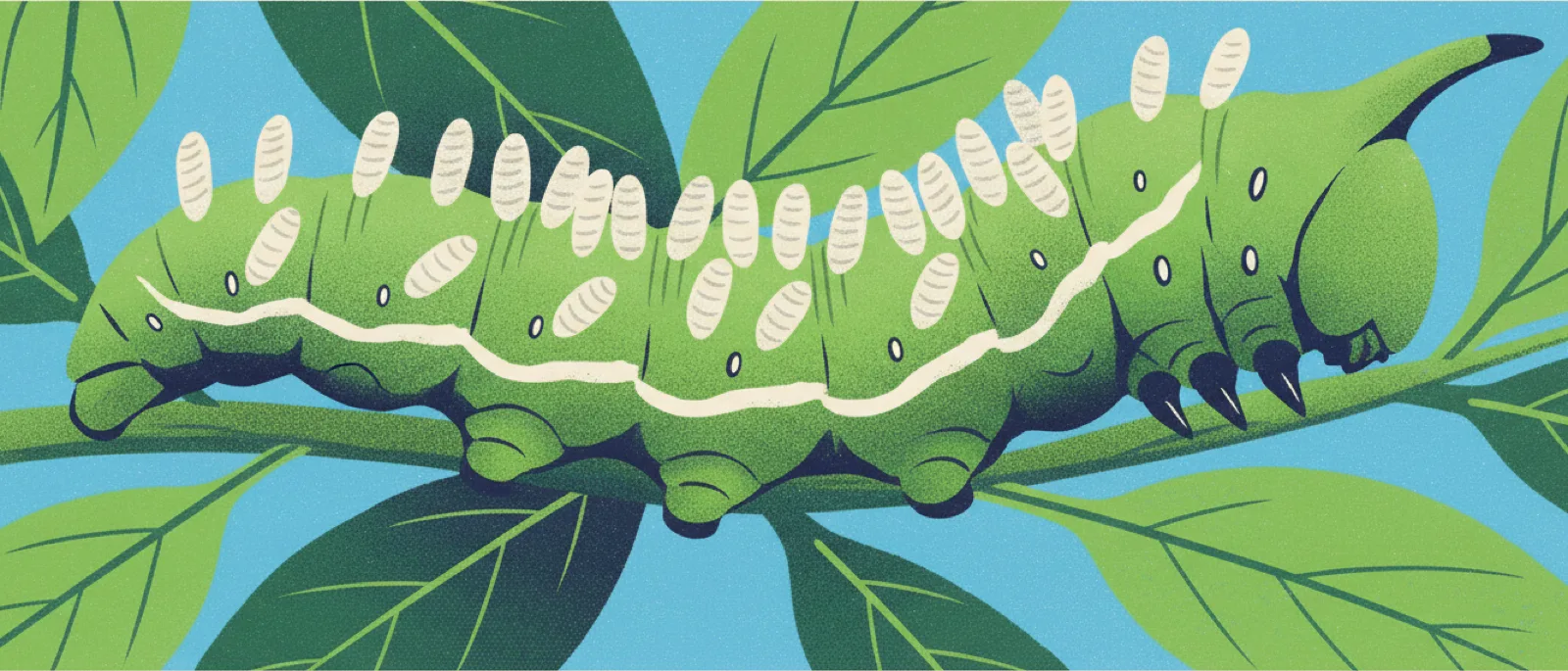
Tomato hornworms covered in white wasp cocoons
When: July to September
Check the tomato patch: a big green hornworm studded with little white capsules has been farmed from the inside by a tiny braconid wasp, and those capsules are the wasp's next generation.
Why this time of year
Late July and August are when Massachusetts sees its one yearly generation of tomato hornworms, so late summer is the peak window for finding one already covered in cocoons.
How to notice it
- Hunt the tomato plants for a fat green caterpillar the size of your finger; follow chewed leaves and dark droppings to find it.
- If it carries rows of small white capsules, those are wasp cocoons; count them, since one hornworm can host dozens.
- Leave a cocoon-covered hornworm where it is; it will not survive to become a moth, and every cocoon is a garden helper about to hatch.
- Check back over a few days to catch the empty cocoons after the wasps emerge.
Try this with kids: How many white cocoons can you count on one caterpillar?
a parasitoid wasp lays its eggs inside another insect, and its young grow up there
Safety
- Everything here is touch-safe: hornworms cannot sting and these wasps do not sting people.
Sources
- umass.eduThe parasitoid braconid wasp Cotesia congregata is an important and fairly common natural enemy of tomato and tobacco hornworms; wasp larvae eat out through the skin and spin cocoons on the caterpillar surface, one hornworm hosting dozens of wasps; avoid hand-picking or killing parasitized hornworms to encourage their natural enemies; one generation per year in Massachusetts, with late July and early August usually the time we see tomato hornworms.
- extension.psu.eduBraconid wasps are natural enemies of hornworms; eggs hatch and feed on the insides of the hornworm, then pupate, and white cocoons appear on the outside of the hornworm body; when handpicking, leave any that are parasitized; hornworms can be a problem from July through early September.
- extension.unh.eduLarvae of both hornworms are heavily parasitized by these wasps and it is common to find hornworm larvae carrying many white cocoons; in New Hampshire the adult moths usually appear July-August.
In the guide for July, August, September