Look closerInsects
Hickory tussock caterpillars: look, but do not touch
When: July to September
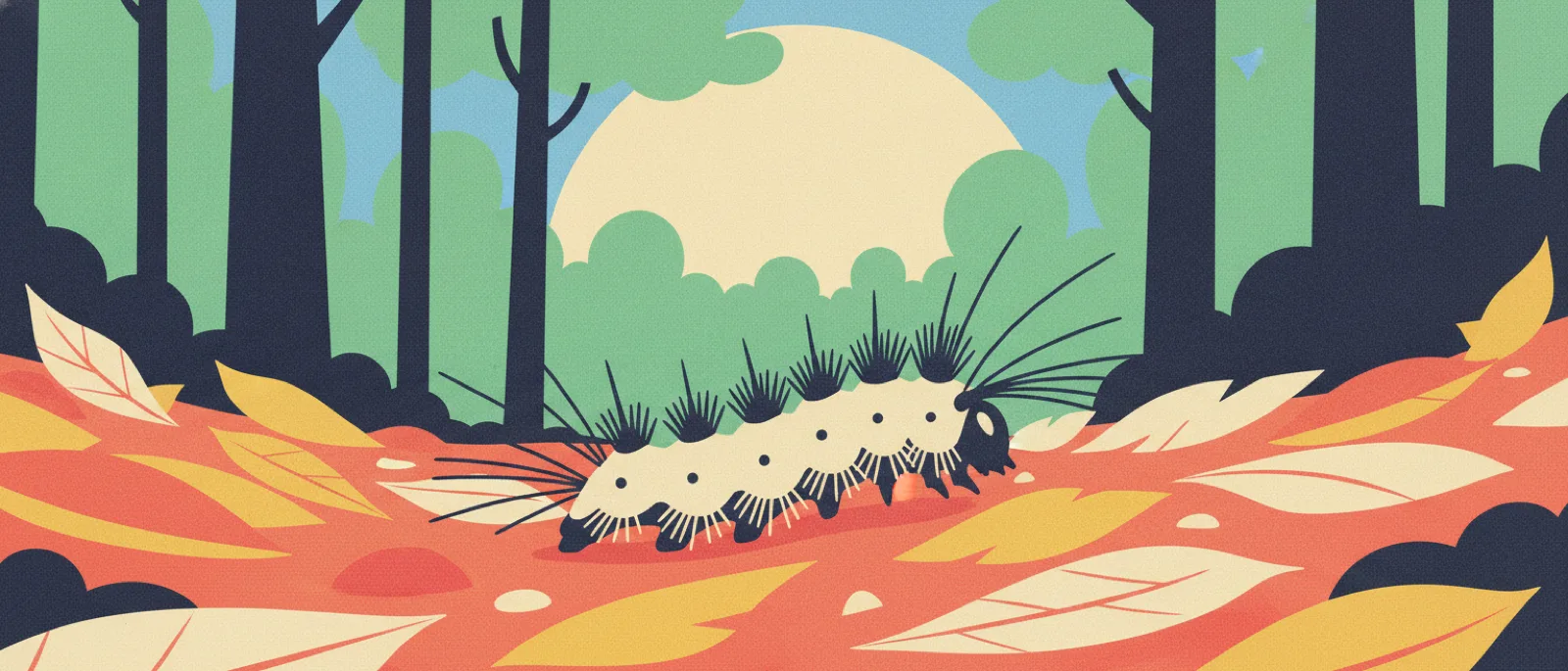
The striking white caterpillar with black tufts crossing the trail is a hickory tussock, wandering in search of a spot to spin its cocoon, and its barbed hairs give many people an itchy rash.
Why this time of year
Late summer into early fall is when mature hickory tussocks leave their host trees and cross paths and pavement hunting cocoon shelter, which is exactly when kids find them.
How to notice it
- Look for a furry white caterpillar with a line of black tufts down its back, on hickories, oaks, and ashes or walking in the open.
- Watch it travel; a wandering one is done eating and shopping for a winter spot.
- Point, follow, photograph, but keep fingers off: the hairs are hollow, barbed, and detach easily.
- Make it the family rule for every fuzzy caterpillar: the fuzz is the message, and the message is do not pet.
Try this with kids: Can you escort your caterpillar across the path with a leaf held in front of it, no touching?
tussocks are the tufts of stiff hair that give these caterpillars their name
Safety
- Do not touch with bare skin; the hairs cause an itchy rash, worse and longer-lasting for some people, and children are the most affected group.
- If hairs embed in skin, lift them off with tape or tweezers; eye contact or a toddler mouthing one warrants medical attention.
Sources
- extension.psu.eduOlder caterpillars are covered in white and black hairs, present July through September and often very apparent in the fall; mature caterpillars are often encountered when they leave the host plant and crawl around searching for a protected place to spin a cocoon; exposure generally results in a localized rash with itching, the barbed hairs detach easily, children account for about 80 percent of exposures; remove embedded hairs with tape or tweezers and seek medical attention for eye exposure or ingestion.
- extension.umaine.eduTussock caterpillars are sometimes very abundant in late summer and early fall; the hairs can cause a very itchy rash, and for hickory tussocks the rash can be much more severe and long-lasting; children are more susceptible than adults and more likely to handle them; the hairs are a defense mechanism, not poisonous or venomous.
- extension.unh.eduHickory tussock moth caterpillars are white with prominent black tufts of hair along their bodies, seen in late summer and early fall; the hairs are hollow and can puncture skin when the caterpillars are handled, causing allergic reactions in sensitive individuals; it is always best to avoid touching any tussock caterpillars with bare skin; hosts include hickory, ash, elm, and oak.
In the guide for July, August, September